#Helmet Must? 🚨 AI Alerts Challan Cut!
AI in your helmet: Spots violations, snaps proof, emails police… instantly.

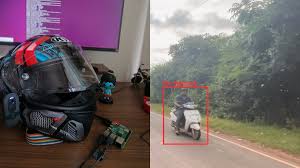
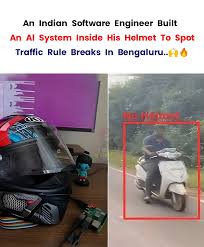
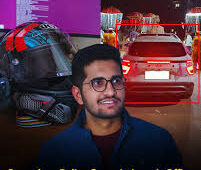
Helmet Must? 🚨 AI Alerts Challan Cut. In January 2026, Bengaluru-based software engineer Pankaj Tanwar (@the2ndfloorguy) captured national attention with his weekend hack: an AI-powered helmet that detects traffic violations in real-time and automatically reports them to police. Frustrated by rampant rule-breaking—like riding without helmets or wrong-side driving—Tanwar rigged a standard helmet with a dashcam, Raspberry Pi, and computer vision models.
The system analyzes frames, verifies violations using high-confidence AI (including cross-checks with models like GPT and Gemini), captures number plates, GPS locations, photos, and clips, then emails evidence directly to authorities—no manual intervention needed.
By Dr. Namrata Mishra Tiwari, Chief Editor https://indiainput.com
The prototype exploded online, amassing over 5 million views in days, shares from industry leaders, investment inquiries, and media coverage from TV channels to newspapers. Thousands messaged Tanwar, inspired to build their own projects. Tanwar’s AI Helmet is Viral and trending!
i was tired of stupid people on road so i hacked my helmet into a traffic police device 🚨
while i ride, ai agent runs in near real time, flags violations, and proof with location & no plate goes straight to police.
blr people – so now ride safe… or regret it. pic.twitter.com/lWaRO01Jaq
— Pankaj (@the2ndfloorguy) January 3, 2026
Most notably, Bengaluru City Police reached out, calling it “innovative and interesting from a road safety perspective.” They scheduled a meeting to explore the tech, potentially enhancing enforcement in India’s traffic-challenged tech hub. While still early-stage and “hacky,” Tanwar is roadmap-planning amid real-world interest, proving citizen-led AI can drive safer roads.
View this post on Instagram
Bengaluru’s roads are increasingly chaotic in recent years, with swelling vehicle numbers exceeding 1.2 crore, relentless congestion turning short commutes into hours-long ordeals, and violations like helmetless riding, red-light jumping, wrong-side driving, and reckless overtaking becoming commonplace. This surge has fueled record traffic fines—₹251 crore collected in 2025 alone—highlighting rampant indiscipline amid peak-hour gridlocks and rising accidents.
Pankaj Tanwar’s (@the2ndfloorguy) AI-Powered Traffic Violation-Reporting Helmet is officially 2026’s most viral Indian tech prototype.
We spoke to him about:
– Why he built it
– How it works
– What he’s planning to do now that he’s famousHere’s what he told us. pic.twitter.com/qTuJ0wjPMg
— Runtime (@RuntimeBRT) January 8, 2026
Using a helmet-mounted camera linked to a Raspberry Pi, the system runs AI models in near real-time to detect violations such as no helmet, jumping dividers, signal jumping, and wrong-side driving. It captures photographic/video proof, extracts number plates, tags GPS location, and automatically emails evidence directly to police for challans—without manual intervention.
🚨 A software engineer from Bengaluru transformed his helmet into an AI-powered traffic police device that detects traffic violations in real time and sends proof with location and number plates directly to police.
Innovation 👌🏻 pic.twitter.com/V8IWch7gtl
— Beats in Brief 🗞️ (@beatsinbrief) January 5, 2026
This citizen-led tech helps the police department by crowdsourcing enforcement in a resource-stretched city, boosting detection of hard-to-spot violations, easing their workload, and promoting accountability. With Bengaluru Traffic Police already engaging Tanwar for discussions, such innovations could deter offenders, enhance road safety, and support official efforts amid the city’s traffic crisis. As the techie himself says “Ride safe—or regret it! “
Garuda : From Scrap to Sci-Fi, Wings of the Future
India’s Silent AI Surge: Code, Compute, and Confidence
Greenland and the Geometry of Power
War on Drugs or War of Deception?
Strategic Autonomy Isn’t a Slogan: Why Pokhran Still Matters
Strategic Autonomy Isn’t a Slogan: Why Pokhran Still Matters