Elon Musk’s Robot Revolution: Surgeons Obsolete by 2029?
Musk predicts Tesla's Optimus bots will outperform all human surgeons at scale within three years, making elite medicine free and accessible.

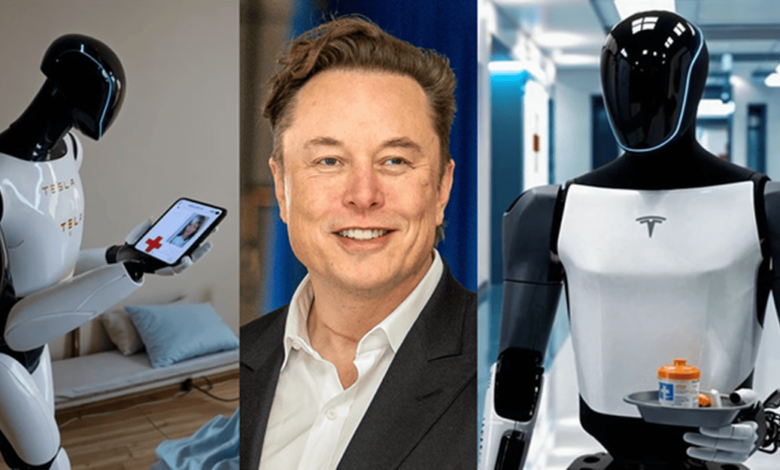
Elon Musk’s Robot Revolution: Surgeons Obsolete by 2029? Elon Musk’s provocative forecast, shared in his Moonshots podcast with Peter Diamandis, asserts that Tesla’s Optimus humanoid robots will eclipse human surgeons by 2029 at scale. He argues humans face lengthy training (10+ years), error risks from exhaustion, and challenges staying current with medical advancements, whereas robots offer flawless dexterity, instant software updates, and mass production—potentially delivering superior, cost-free care worldwide, surpassing even presidential-level medicine.
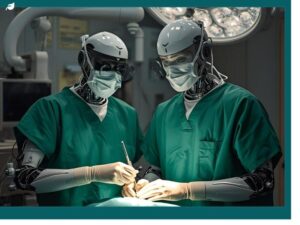
Musk asserts, “Three years. And by the way, that’s three years at scale. There will probably be more Optimus robots that are great surgeons than there are all surgeons on Earth.”
Building on this, robotic surgery has advanced since the da Vinci system’s 2000 debut, now used in about 15% of global operations, especially minimally invasive ones in fields like urology, gynecology, and general surgery. Benefits include reduced incisions, minimal blood loss, quicker recoveries, and lower infections. The sector’s value hit $9.3 billion in 2024, projected to reach $16.4 billion by 2030, fueled by AI enhancements like haptic feedback and competitors such as Johnson & Johnson’s Ottava.
By -Dr. Namrata Mishra Tiwari, Chief Editor https://indiainput.com
This builds on earlier statements, such as his November 2025 shareholder meeting comments where he claimed Optimus would “eliminate poverty” by providing universal access to elite medical care.
Elon Musk’s jaw-dropping prediction (Jan 2026):
“Don’t go into medical school.”
Elon Musk: “Yes. Pointless.”In 3 years (2029), Optimus robots will be better surgeons than any human on Earth — at scale.
By 4–5 years? Not even close. The best medicine in the world will be free… pic.twitter.com/q7KTMpICk8— Camus (@newstart_2024) January 10, 2026
However, these tools are teleoperated, not autonomous—surgeons direct them via consoles, with AI limited to aids like imaging analysis. Achieving Musk’s vision requires robots to independently handle real-time decisions, patient variations, and emergencies, areas where tech lags.
Optimus Gen 3 demonstrates factory-level dexterity, leveraging Tesla’s Full Self-Driving AI and Neuralink’s precise implant robots. Yet, experts diverge: NYU’s Arthur Caplan dismisses the timeline as overly optimistic, emphasizing comparative testing needs. Neurosurgeon Richard Menger views it as long-term feasible but short-term hype, praising consistency in procedures like spine surgery while highlighting irreplaceable human judgment and team dynamics.
Full interview: https://t.co/pKARc03Xrx
— Camus (@newstart_2024) January 10, 2026
Pros include error elimination, knowledge scalability, and global access, potentially resolving healthcare inequities. Cons encompass unemployment for over 1 million U.S. doctors, liability for AI failures, dehumanized patient interactions, and access gaps if not truly universal. Regulatory bodies like the FDA demand 5-10 year trials, and ethical concerns under frameworks like the EU AI Act could slow deployment.
Online discourse mirrors this: Reddit threads express job anxieties among medical students, while X posts from tech fans celebrate the “revolution.” Consensus favors gradual integration—robots augmenting humans initially—to mitigate risks while fostering innovation.
The timeline might be aggressive, but the direction is inevitable. Once AI + robotics nail surgical precision + diagnostic accuracy + infinite patience, human surgeons become the bottleneck. That’s when healthcare transforms from scarce to abundant.
— BrianEMcGrath (@BrianEMcGrath) January 11, 2026
Key Points:
- Robotic systems like da Vinci already assist in 15% of surgeries, offering precision and faster recovery, but remain human-operated.
- Musk envisions fully autonomous Optimus bots with superhuman accuracy, scalable production, and instant updates.
- Experts argue 3-5 years is unrealistic; full autonomy may take 10-20+ years due to anatomical variability, ethics, and regulations.
- Potential: Democratizes elite care, reduces errors, addresses shortages.
- Risks: Job losses, AI liability, loss of human judgment—controversial but exciting for innovation.
While thrilling, evidence suggests gradual evolution rather than rapid dominance, with robots augmenting, not replacing, humans soon.
SOURCE :
CATCHUP FOR MORE ON : https://indiainput.com
Cricket Meets Chords: The Viral ‘Bat-ar’ Surprise for Jemimah!
Cricket Meets Chords: The Viral ‘Bat-ar’ Surprise for Jemimah!
Trumps Greenland 2026: Superpowers Jostle, Meloni Pushes Back
Trumps Greenland 2026: Superpowers Jostle, Meloni Pushes Back
Maharashtra’s Cyber Shield: ADGP Yashasvi Yadav Strikes Back
Maharashtra’s Cyber Shield: ADGP Yashasvi Yadav Strikes Back
AI Is Doing the Boring Work — So Humans Can Do the Brilliant
AI Is Doing the Boring Work — So Humans Can Do the Brilliant
#Helmet Must? 🚨 AI Alerts Challan Cut!