
China’s Cuddly Power Play: Farewell or Tease?
Panda-Free Japan: Furry Diplomats Flee – Real Heartbreak or Hype?

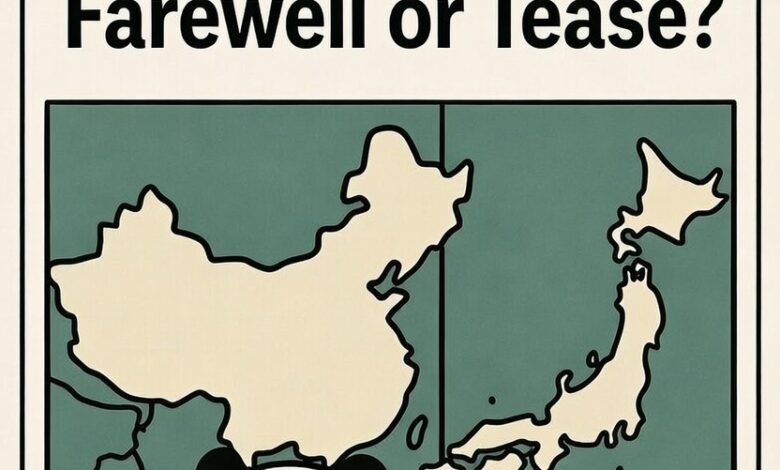
China’s Cuddly Power Play: Farewell or Tease? In the whirlwind of social media, a recent Instagram reel has captured global attention, proclaiming Japan’s farewell to its last giant pandas. The video, shared widely, depicts emotional scenes at Tokyo’s Ueno Zoo where twin siblings Xiao Xiao and Lei Lei, born in 2021, bid adieu to adoring fans before their return to China. Thousands queued for lottery tickets to glimpse the black-and-white icons, marking what appears to be the end of nearly 50 years of pandas gracing Japanese zoos. But is this truly “Panda-Free Japan,” or merely a fleeting social media storm amplified by impending new arrivals from China? Let’s dissect the buzz and uncover the underlying truths.

By- Dr. Namrata Mishra Tiwari, Chief Editor https://indiainput.com
Giant pandas have long symbolized Sino-Japanese friendship, a cornerstone of China’s famed “panda diplomacy.” The tradition began in 1972 when China gifted Kang Kang and Lan Lan to Japan to commemorate normalized diplomatic ties post-World War II. Since then, pandas like Ri Ri, Shin Shin, and their offspring have drawn millions to Ueno Zoo, boosting tourism and fostering cultural exchange. These bears are not outright gifts but loans, with China retaining ownership. Offspring, such as Xiang Xiang who returned in 2023, must repatriate by a certain age for breeding programs in Sichuan Province. Japan pays hefty annual fee.
People have gathered at Tokyo’s Ueno Zoo to give two giant pandas a fond and teary farewell. Twins Xiao Xiao and Lei Lei are now in China, leaving Japan panda-less for the first time since 1972.https://t.co/O4D8ERdfQn pic.twitter.com/A0WmXfaH6f
— NHK WORLD News (@NHKWORLD_News) January 28, 2026
The current saga unfolded on January 28, 2026, when Xiao Xiao and Lei Lei departed Narita Airport for Chengdu, arriving safely amid fanfare in China. This leaves Japan without a single giant panda for the first time in over five decades. Social media erupted with nostalgia: hashtags like #PandaFarewell trended, reels amassed millions of views, and users shared tearful stories of zoo visits. The Instagram post in question amplified this sentiment, framing it as a poignant closure. Yet, skeptics wonder if it’s overhyped—perhaps a “ripple” designed to stir emotions while quietly paving the way for fresh loans.
Xiaoxiao & Leilei, the pair giant pandas, returned to China safely from a zoo in #Tokyo, #Japan. Now the two pandas 🐼 have settled into quarantine at the Ya’an base of China Conservation and Research Center for the Giant Panda. #パンダ #シャオシャオ #レイレイ #シャオレイ (video… pic.twitter.com/OQ6kHoXp5I
— iChongqing (@iChongqing_CIMC) January 28, 2026
Delving deeper, the truth reveals more than mere expiration of contracts. Diplomatic tensions between Tokyo and Beijing are at a nadir. Japan’s new Prime Minister Sanae Takaichi’s firm stance on Taiwan—vowing military support if China invades—has irked Beijing. This geopolitical friction has halted panda renewals. Chinese officials, when queried about replacements, demurred, inviting Japanese fans to visit pandas in China instead. No announcements of new dispatches have surfaced; instead, China continues panda loans to allies like Australia, Germany, and Russia, signaling selective diplomacy.
Is this permanent? History suggests panda diplomacy ebbs and flows with relations. Past returns, like Xiang Xiang’s, didn’t preclude extensions for others. However, current strains—exacerbated by territorial disputes in the East China Sea and historical animosities—make near-term renewals unlikely. Experts argue the “panda-free” status isn’t just logistical but a deliberate pause in soft power exchanges. Social media’s role? It’s amplified genuine grief but hasn’t fabricated the event; the ripple stems from real policy shifts, not covert preparations for new arrivals
After 50 years Japan is returning the loaned Pandas to Japan today. Thousands Japanese are saying goodbye. Even the guards are crying. pic.twitter.com/GHKAmX2vTI
— Nina (@ShakeLS) January 27, 2026
For Japanese fans, the void is palpable. Ueno Zoo’s panda enclosure now stands empty, a stark reminder of frayed ties. Conservationists applaud the repatriation for bolstering breeding efforts—panda populations have rebounded from endangered status thanks to such programs. Yet, the cultural loss stings. As one visitor lamented, “I’ve lost part of my heart.”
In conclusion, “Panda-Free Japan” is no mere hype; it’s a tangible outcome of diplomatic discord. While social media stirs the pot, the truth lies in geopolitics—no new pandas are en route, at least for now. This chapter’s close might spur reconciliation, or it could herald a new era where pandas remain distant symbols. Only time, and improved relations, will tell if these cuddly diplomats return to Japanese shores.
SOURCE : http://x.com
https://www.instagram.com/reel/DUFbIdBiQSV/?igsh=YmVwY3R0YTAweWw3
CATCHUP FOR MORE ON : https://indiainput.com
Don’t Know Which Anime to Watch First? Start With These 5
From Babush to Billions: Costa’s India Love
Nature Showed No Mercy, Loyalty Showed No Fear
Check the Bat, Check the Scoreboard! India Seal T20 Series