
#CBSE Digital Evaluation 2026: Pros, Cons, & OSM Controversy
Faster Results and Fewer Errors — Or New Glitches in CBSE’s Online Marking Shift?

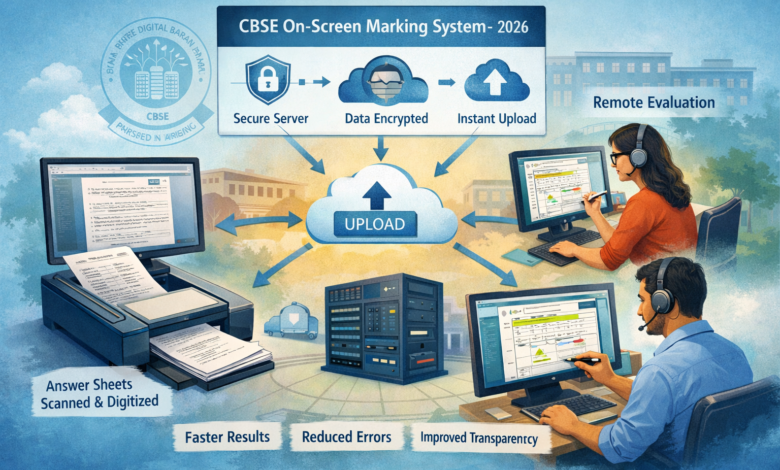
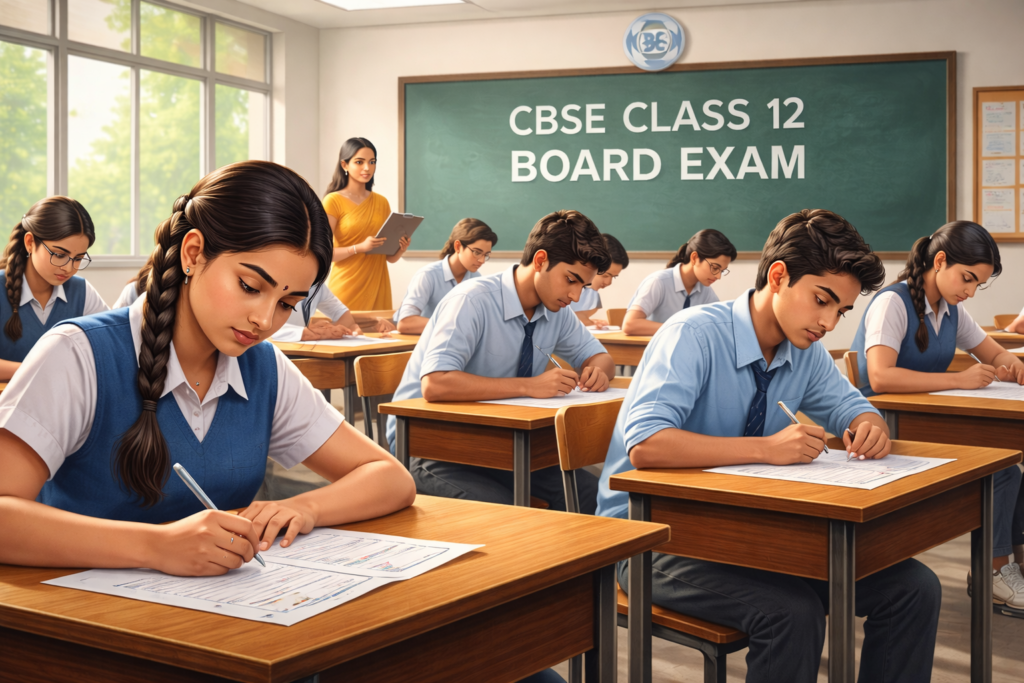
#CBSE Digital Evaluation 2026: Pros, Cons & OSM Controversy. The Central Board of Secondary Education (CBSE) has introduced a significant reform in the evaluation of Class 12 board exams by implementing an On-Screen Marking (OSM) system. Under this new process, answer sheets are scanned and uploaded to a secure digital platform where evaluators assess them online instead of physically handling paper copies. While CBSE describes the move as a step toward transparency, speed, and accuracy, the reform has triggered an intense debate among students, teachers, and education experts.
By, http://indiainput.com desk.
Supporters argue that digital evaluation modernises India’s board examination system. One of the biggest advantages is the elimination of totalling errors. Since marks are entered directly into the system, there is no risk of miscalculation during addition or transfer of marks.
The process is also expected to speed up result declaration, reduce logistical burdens of transporting answer sheets, and maintain better record security. In theory, digital trails make monitoring easier and improve accountability among evaluators. CBSE maintains that multiple dry runs and teacher training sessions were conducted before rollout, suggesting that the system is not an abrupt experiment but a planned transition.
The Central Board of Secondary Education (CBSE) has decided to once again start On-Screen Marking (OSM) for Class 12.
OSM is a digital system in which scanned answer sheets are evaluated by teachers on computers, with marks calculated automatically by software. pic.twitter.com/Ci23X2NZEr
— ANI (@ANI) February 12, 2026
However, critics highlight practical concerns. A major worry is scan quality. If answer sheets are poorly scanned, evaluators may struggle to read handwriting clearly on screens. Unlike physical copies, where examiners can tilt pages or view ink texture, digital images may reduce clarity. Screen fatigue is another issue — long hours of online correction could impact concentration levels, potentially affecting marking consistency.
Perhaps the most controversial decision linked to the reform is the reported removal of post-result verification of marks for Class 12. Earlier, students could apply for rechecking or totalling verification if they suspected errors. With CBSE arguing that OSM removes calculation mistakes, this safeguard is being reduced. Students fear that if a genuine evaluation error occurs, there may be limited avenues for correction.
Online Marking System (Answer Sheet Checking) of Class XII by CBSE from this session 2025-26. pic.twitter.com/yWGJnTSKxi
— Shayar Singh Rathore (@shayar_singh) February 13, 2026
The debate ultimately reflects a larger question: Can technology fully replace traditional systems without unintended consequences? While digital marking aligns with India’s broader push toward educational modernization, its success depends on flawless execution, reliable infrastructure, and responsive grievance redressal mechanisms.
CBSE’s online marking system could mark a progressive leap forward — but only if technical efficiency is matched with fairness, transparency, and student trust.
SOURCE :
https://youtu.be/EStGHichIj8?si=fal4tvxA6QKTLhbL
FEEDBACK : contact@indiainput.com
CATCHUP FOR MORE ON : http://indiainput.com
#Mahashivratri Midnight Mantra: The Awakening with Sadguru
Elsagate Uncovered: YouTube’s Most Disturbing Kids’ Trend
YouTube’s Invisible Predators: Beware the “Amazing Video!” Bots
YouTube’s Invisible Predators: Beware the “Amazing Video!” Bots