
Dharma Dhwajarohan @ Ayodhya: A Civilizational Renaissance !
Echoes of the Epics: From Mahabharata’s Battle Banners to Modern Mandir Dhwajas


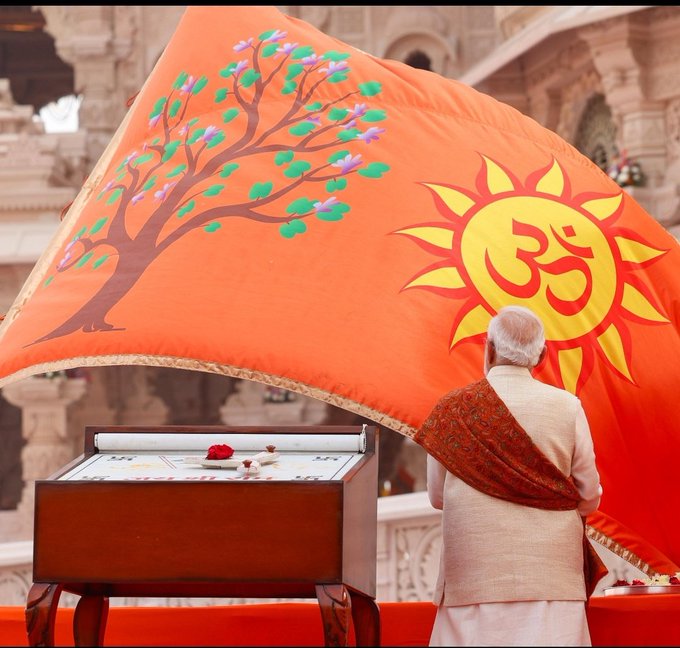
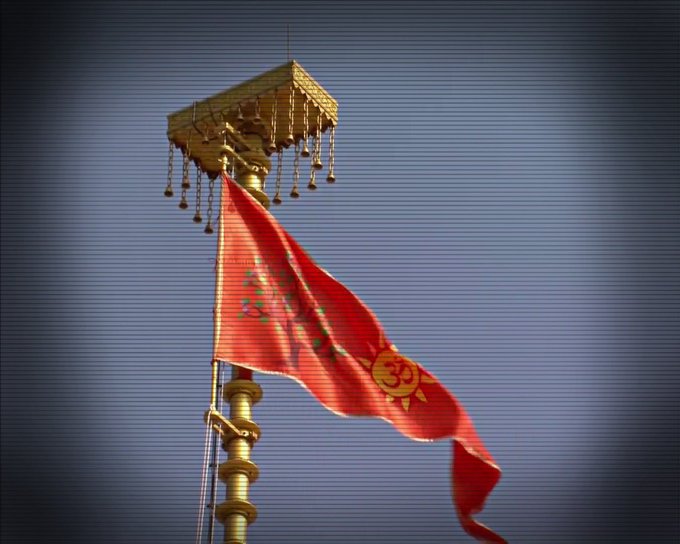
Dharma Dhwajarohan: A Civilizational Renaissance.The Dharma Dhwajarohan Utsav on Monday signaled the formal completion of the temple, marking a milestone years after the Supreme Court’s 2019 verdict and the idol’s consecration in 2024. The 10-by-20-foot flag unfurled at the ceremony features a sun emblem representing Lord Ram’s valor, the sacred ‘Om,’ and a Kovidara tree symbolizing devotion.
By Dr. Namrata Mishra Tiwari , Chief Editor http://indiainput.com
Prime Minister Narendra Modi described the event as the pinnacle of India’s cultural consciousness, reflecting unity, truth, and prosperity. Uttar Pradesh Chief Minister Yogi Adityanath attended the noon rituals amid chants of ‘Jai Shri Ram’ and heightened security.
To witness the Dharma Dhwajarohan Utsav at Shri Ram Janmabhoomi Mandir is a moment crores of people in India and the world have waited for. History has been made in Ayodhya and this inspires us even more to walk the path shown by Prabhu Shri Ram. pic.twitter.com/3K9j6CQS68
— Narendra Modi (@narendramodi) November 25, 2025
The temple flag, or dhwaja, carries profound significance from the days of the Mahabharata to today’s India, embodying traditions of valor, divinity, and unity. Its meaning and influence have evolved but remain a powerful symbol in both spiritual and national contexts.
Historical Roots in the Mahabharata
Flags have played a vital role in ancient Indian epics, notably the Mahabharata. Warriors identified themselves and sought blessings through their banners: Arjuna’s chariot bore the Kapidhwaja, featuring Hanuman as a symbol of strength and divine favor; Ashwatthama’s flag showed a lion’s tail, and Lord Shiva’s banner had a bull.
These flags were not mere identifiers but invoked protection, victory, and association with specific divine virtues. In ancient warfare, flags also rallied troops and signaled faith and resolve in battle.
PM Modi’s legacy will be remembered for the next 5,000 years 🔥🚩 https://t.co/afkjtFOxMk pic.twitter.com/qU5MQY4Cvt
— News Algebra (@NewsAlgebraIND) November 25, 2025
Spiritual and Symbolic Meaning
Beyond their martial use, temple flags represent the presence and glory of the deity within a temple. They are believed to indicate the constant flow of divine energy from the cosmos to the sanctum; hoisting a dhwaja marks a place as sacred and invites blessings for those in the vicinity.
Colors and emblems align with spiritual concepts and the deity’s attributes. The orange flag, for example, is a reminder of renunciation and humility. The act of raising the flag symbolizes victory over ego and desires, echoing themes from epic narratives.
http://
Finally the wait is over. 😍🙏🏼
500years struggle, generations of wait and after innumerable sacrifices finally our Bhagwa flag rises high in the skies of our #AyodhyaRamMandir #RamMandir #Dhwajarohan #JaiShriRam pic.twitter.com/ciRr9h6u9K
— Tathvam-asi (@ssaratht) November 25, 2025
Modern Significance
In contemporary India, the flag atop Ayodhya’s Ram Mandir during the Dharma Dhwajarohan Utsav stands as a restoration of cultural pride and a declaration of national unity and spiritual renaissance. Today, the flag transcends religious boundaries. It is a bridge between the ancient and the modern, a sign of peace, prosperity, and truth.
Leaders like Prime Minister Narendra Modi have called the dhwaja the pinnacle of India’s consciousness, linking its imagery to the nation’s aspirations for inclusivity and progress. The flag now also serves as a reminder to reclaim indigenous symbols, breaking free from colonial legacies and empowering communal harmony and spiritual growth.
#KovidaraDhwaja
Lakshman spots Ayodhya’s army in Chitrakoot by the Kovidāra Dhwaja on the chariot:
विराजत्युद्गतस्कन्धः कोविदारध्वजो रथे
Fearing war, he wonders: अपि नौ वशमागच्छेत् कोविदारध्वजो रणे
Today, Ayodhya reclaims its ancient emblem & pride.
Jai Siya Ram! pic.twitter.com/mJBQGh6vzQ— Ami Ganatra (અમી ગણાત્રા) (@6amiji) November 25, 2025
Lasting Relevance
From guiding ancient pilgrims to galvanizing modern celebrations, the temple flag continues to symbolize the victory of spiritual values and unity. It reminds crowds and worshippers not only of divine presence but also of India’s journey—where traditions adapt to shape new meanings, inspiring collective effort and resilience.
There are many distinct types of dhwajas (flags) in Hindu tradition, each with unique symbols and meanings connected to deities, virtues, or spiritual aspirations.
Classical Examples from Epics
-
-
-
Arjuna’s flag: Featured Hanuman, representing strength and the valor of Lord Rama, and symbolized divine support in battle.
-
Bhima’s flag: Displayed a lion, signifying courage and might.
-
Duryodhana’s flag: Showed a serpent, indicating cunning and dominance.
-
Ashwatthama’s flag: Depicted a lion’s tail with golden rays, representing authority and power.
-
Bhishma’s flag: Had a tree, symbolizing life and steadfastness.
-
-
Specific Temple and Symbol Dhwajas
-
-
Hanuman Jhanda: Bright saffron or red triangle flag, usually with Hanuman’s image or mace, represents unwavering devotion, energy, and protection from negativity.
-
Durga Jhanda: Deep red flag, often with the goddess’s image or her lion, invokes power, courage, and protection for devotees.
-
Om Dhwaja: Features the sacred ‘Om’ symbol, signifying the universal source, spiritual progress, and auspicious beginnings.
-
Swastik Dhwaja: Bears a swastik, symbolizing well-being, good fortune, and cosmic harmony.
-
Surya (Sun) Dhwaja: Yellow or saffron flag with the sun motif, indicating vitality, enlightenment, and removal of darkness.
-
Chakra Dhwaja: Displays the disc (chakra), representing righteousness, cosmic order, and Lord Vishnu’s divine intervention.
-
Khatu Shyam Jhanda: Blue or saffron flag with the image of Shyam Baba, embodies grace and protection, used mainly in Rajasthan.
-
Goga Ji Jhanda: Green or saffron, shows Goga Ji on horseback, and is believed to protect against snakes and evil influences.
-
- Dhanvantari Jhanda: Yellow flag with Dhanvantari depicted with herbs, symbolizes health, healing, and blessings for medical practitioners.
- Sheetala Mata Jhanda: Red flag with the goddess and donkey, is associated with healing and protection from disease
Regional and Community Variants
Each of these Dhwajas is a tangible expression of faith, reflecting the attributes, virtues, or energies devotees wish to invite into their lives, whether in temples, homes, or community spaces. The symbols and colors carry forward the epic traditions while adapting to diverse regional beliefs.
SOURCE : http://X.COM
CATCHUP FOR MORE ON : http://indiainput.com
India Salutes Namansh Syal: The Lost Guardian of Our Skies
When Visionaries Meet: Musk, MBS, and a World Beyond Poverty
When Visionaries Meet: Musk, MBS, and a World Beyond Poverty
AI Overload : How Excessive Use Threatens Young Teen Minds!!
AI Overload : How Excessive Use Threatens Young Teen Minds!!