
Gita’s Global Wake-Up : India’s Toxic Ticking Bomb
Pollution Trumps Tariffs: Time to Clean House Before Davos Drama.

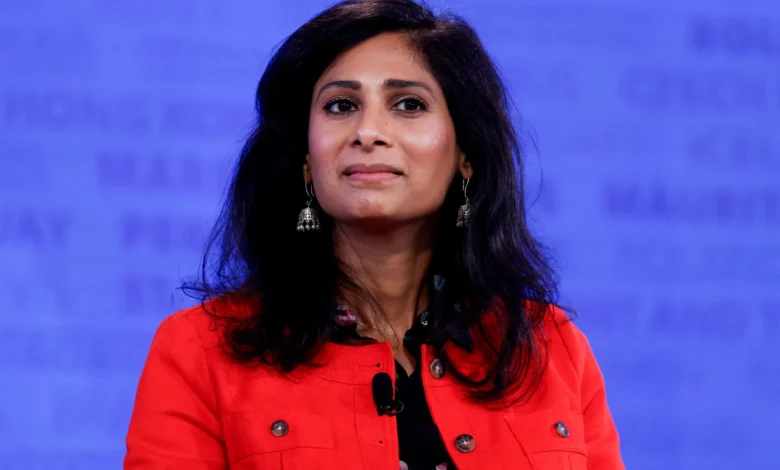
Gita’s Global Wake-Up : India’s Toxic Ticking Bomb. At the World Economic Forum in Davos on January 2026, Gita Gopinath, Harvard professor and former IMF First Deputy Managing Director, delivered a stark message: pollution poses a bigger economic threat to India than global tariffs.
She stated, “Pollution is a challenge in India, and its impact on the economy is far more consequential than any impact of tariffs imposed so far.” While tariffs grab headlines amid trade wars, pollution silently erodes health, productivity, and growth—costs no policy fix can reverse overnight.
By – Dr. Namrata Mishra Tiwari, Chief Editor http://indiainput.com
Air pollution alone shaves approximately 3% off India’s GDP yearly through healthcare burdens, lost workdays, and premature deaths, totaling billions in economic drag.
Claims of an 18% hit lack clear sourcing in recent studies and may stem from aggregated ailments like respiratory diseases, heart issues, and reduced labor output; deeper research is essential. Publishing moving averages of PM2.5 levels over 24 hours, months, quarters, and years would enhance transparency and tracking.
🌫️📉🇮🇳 Pollution a bigger economic threat to India than tariffs, says Gita Gopinath at WEF 2026 🌍🏔️ https://t.co/dViqhJbHao #WEF2026 #GitaGopinath #IndiaEconomy #Pollution pic.twitter.com/eQmYAZl0CB
— Economic Times (@EconomicTimes) January 21, 2026
Crowding in megacities, fossil fuel dependence, and stubble burning in agrarian states like Punjab and Haryana fuel toxic smog. Yet systemic failures exacerbate the crisis. India remains visibly dirty due to unplanned urbanization overwhelming infrastructure. Environmental rules exist but enforcement is lax, hampered by political capture, excessive regulatory discretion, and corruption that allows powerful industries to evade compliance
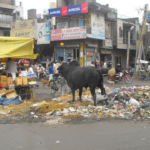
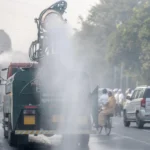
Accountability is virtually nonexistent: officers face no performance-linked incentives, and terminations for negligence are rare, perpetuating inefficiency. Municipal corporations grapple with severe manpower shortages. Against dense populations and vast areas—e.g., Mumbai’s 20 million residents over 600 sq km—sanitation staffing often falls below 1 worker per 1,000-2,000 citizens, far short of global benchmarks for effective coverage.
Road cleaning clings to manual brooms, relying on cheap labor pools rather than investing in machines, which are costly, ill-suited to narrow or uneven streets, and prone to kicking up more dust.
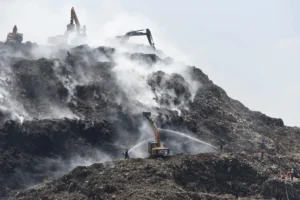
Open garbage points proliferate from patchy collection (covering only 70% in many cities), absent bins, and minimal segregation, leading to heaps, vermin, and open burning that spikes emissions.
Gopinath’s global spotlight raises a fair question: Should experts and activists tackle these at home instead of “blaring” them at WEF, potentially demeaning India? Domestic execution—bolstering enforcement, tying officer pay to outcomes, expanding municipal hires, deploying affordable mechanized cleaners, and building closed waste facilities—is paramount.
Yet international forums like Davos are not betrayal; they draw investment in clean tech, forge partnerships, and signal India’s resolve. Silence would isolate the problem, while voicing it accelerates solutions without compromising national pride.
India’s pollution time bomb ticks louder than any tariff. Prioritizing accountability, infrastructure, and data-driven transparency can defuse it, turning environmental crisis into economic strength.
SOURCE :
https://www.youtube.com/shorts/8wedOF1ym8U
https://www.youtube.com/watch?v=-TleyvQgiM8
CATCHUP FOR MORE ON : http://indiainput.com
Fadnavis Fires Up Davos: Maharashtra’s Investment Blitz!
IndiaAI Mission : Vaishnaw’s Data-Driven Rebuttal
Davos Drama: Hypocrisy Exposed, MoU Magic or Money Waste?
श्री हनुमान चालीसा : श्रद्धा, शक्ति और समाधान का दिव्य स्रोत।
श्री हनुमान चालीसा : श्रद्धा, शक्ति और समाधान का दिव्य स्रोत।
India’s Bold BRICS CBDC Move !!