Kerala’s Free Degree Revolution: Zero Fees, High Stakes

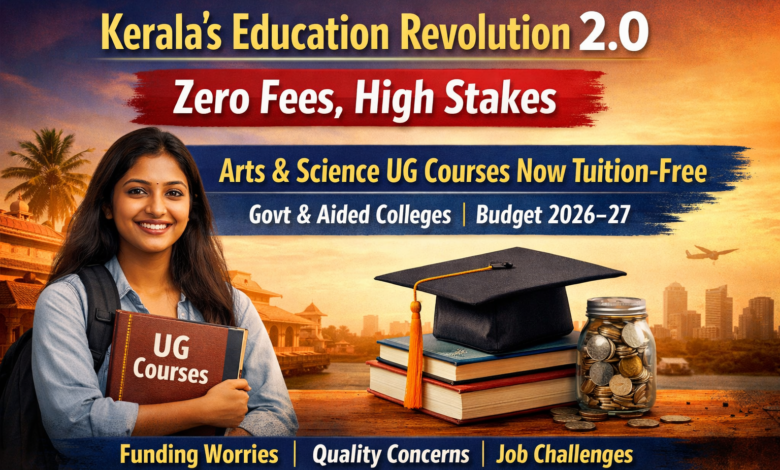
Kerala’s Free Degree Revolution: Zero Fees, High Stakes. In a landmark move, the Kerala government has announced that tuition fees for undergraduate arts and science courses—including BCom—will be fully waived in government and aided colleges from the 2026–27 academic year. The policy, unveiled in the state budget, effectively extends free education beyond Class 12 and is being positioned as a first-of-its-kind initiative in India at the graduation level for these streams.
By_ http://indiainput.com Desk
The decision underscores Kerala’s long-standing commitment to education and social development.
Often ranked among India’s top performers in literacy and human development indicators, Kerala is now attempting to remove one of the last financial barriers for students from economically weaker backgrounds.
By eliminating tuition fees, the state aims to increase enrolment, reduce dropout rates, and make higher education more inclusive.
Transforming Lives
Supporters of the move argue that this could be transformative. For many families, even modest college fees can deter students—especially in rural or low-income households—from pursuing degrees.
The policy could also strengthen public institutions, which have faced growing competition from private colleges in recent years. With financial pressure reduced, students may be more inclined to choose government and aided colleges, potentially revitalizing these institutions.
🚨 Kerala has become the first state in India to provide FREE education up to the graduation level for arts and science students. pic.twitter.com/JA23x8YOim
— Indian Tech & Infra (@IndianTechGuide) April 13, 2026
Fiscal effect?
However, the announcement has also sparked debate. Critics question how the state will sustain the financial burden of such a scheme, particularly given Kerala’s already tight fiscal situation.
Funding free education at scale requires consistent budgetary support—not just for fee waivers, but also for maintaining infrastructure, hiring faculty, and ensuring academic quality.
Career Opportunities
Another concern lies beyond the classroom: employability. Kerala has long grappled with a paradox—high educational attainment but limited local job opportunities.
This has led to significant out-migration, with graduates seeking employment in other states or abroad. Without parallel investments in job creation and industry growth, some argue that free education alone may not address this structural challenge.
View this post on Instagram