
Nine Resolves One Vision : Modi’s Udupi Message
At Sri Krishna Matha, PM links ancient wisdom with modern challenges—urging citizens to drive India’s next leap forward.


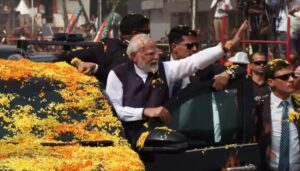
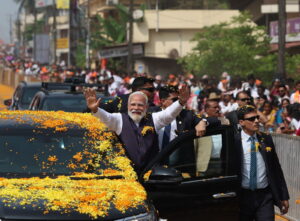
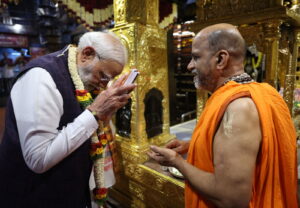
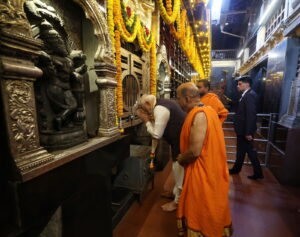
Nine Resolves One Vision For New India: Prime Minister Narendra Modi’s recent visit to Udupi—home to the historic Sri Krishna Matha and the philosophical legacy of Madhvacharya (Dvaita Vedanta) —became the backdrop for a powerful national message. Participating in the Laksha Kantha Gita Parayana, where over one lakh devotees collectively chanted verses of the Bhagavad Gita, Modi used the moment to articulate nine transformative resolves for India’s future. These resolves, rooted in spirituality yet aimed at practical nation-building, reflect an attempt to align India’s civilizational ethos with contemporary challenges.
BY- Dr. Namrata Mishra Tiwari, Chief Editor http://indiainput.com
Udupi isn’t just a religious centre — it has historically been influential in spiritual, cultural, and governance traditions: From being home to the philosophical lineage of Madhvacharya (Dvaita Vedanta) to having early models of civic governance and water/sanitation systems decades ago, Udupi’s history blends spirituality and civic sense.
PM Modi as the Arjuna of Our Times
Sri Sri Sugunendra Theertha Swamiji of Sri Krishna Math shared a touching message in Udupi today. He said PM @narendramodi carries the qualities of Arjuna in Indra Avatar, and even the name ‘Narendra’ signifies Arjuna. He added that in the… pic.twitter.com/9pSu4Pt2dO
— MyGovIndia (@mygovindia) November 28, 2025
In many ways, these nine resolves represent a micro-charter of civic responsibility. They touch upon issues that dominate the current national discourse: By delivering this message in Udupi, Prime Minister Narendra Modi bridged the symbolic and the strategic, Decoding the NINE resolves :
1.Water Conservation: India’s Most Urgent Resource Crisis
India is heading into a decade of water stress:
-
Rapid groundwater depletion
-
Urban water shortages in major cities
-
Climate-driven extreme droughts and irregular monsoons
The resolve to “save every drop” is both symbolic and urgent. Coming from Udupi — a region known for traditional water-storage systems — the message carries historical weight.
Why it matters now:
India cannot meet future agricultural or industrial needs without strong community-level water discipline.
2.Tree Plantation: A Grassroots Climate Strategy
India has committed to major carbon-sink targets. Tree plantation by citizens:
-
Reduces heat islands
-
Restores green cover
-
Builds ecological responsibility in youth
Planting a tree “in your mother’s name” adds emotional attachment, increasing participation.
Why it matters now:
Heatwaves are intensifying, and urban greenery is shrinking — citizen-led tree drives can meaningfully fill gaps.
3.Uplifting One Poor Family: Localised Social Empowerment
Instead of depending solely on state welfare, this resolve puts social responsibility into the hands of individuals:
-
Food support
-
Skill training
-
Schooling help
-
Digital learning support
Why it matters now:
Economic inequality is rising, and a community-driven approach can complement government schemes.
4.Swadeshi / “Vocal for Local”: Strengthening India’s Internal Economy
Global supply chain shocks (post-pandemic, geopolitical tensions) have proven the need for self-reliance.
Supporting local:
-
Boosts MSMEs
-
Secures rural jobs
-
Reduces dependence on volatile imports
Why it matters now:
India’s small industries are recovering slowly — public buying behaviour can directly influence recovery.
5. Natural Farming: Health + Soil Revival
Chemical-heavy farming has:
-
Damaged soil fertility
-
Increased farmer debt
-
Hurt long-term productivity
Natural/organic farming:
-
Cuts input costs
-
Improves soil health
-
Yields chemical-free food
Why it matters now:
India is pushing for sustainable agriculture and millet-based nutrition. This resolve aligns perfectly with international climate commitments.
6.Healthy Living (Millets, Low Oil): The Lifestyle Crisis
India’s major health threats today:
-
Diabetes
-
Hypertension
-
Obesity
-
Heart disease
Promoting millets (India’s “Shree Anna”) combines:
-
Nutrition
-
Heritage
-
Farmer income boost
Why it matters now:
Lifestyle diseases are overwhelming healthcare systems; preventive habits are essential.
7.Daily Yoga: Mental Health + Physical Fitness
Yoga is:
-
Low-cost
-
Accessible
-
Scientifically recognised
It addresses India’s rising mental-health concerns, especially among youth.
Why it matters now:
Post-pandemic stress, online lifestyles, and reduced physical activity make yoga extremely relevant.
8.Preserving Manuscripts & Scriptures: Cultural Archives Under Threat
India’s ancient manuscripts are disappearing due to:
-
Poor storage
-
Lack of digital archiving
-
Loss of traditional scholars
Udupi — home of philosophical tradition (Madhvacharya) — is the perfect platform for this call.
Why it matters now:
India’s soft power, academic research, and cultural continuity depend on saving these texts.
9.Pilgrimage to 25 Spiritual/Heritage Sites: Cultural Unity in Diversity
Visiting heritage sites achieves:
-
Tourism boost
-
Awareness of India’s diverse traditions
-
Pride and identity
-
Economic benefits to small temple towns
Why it matters now:
Cultural tourism is becoming one of India’s biggest economic drivers.
🕉️Why Udupi Was Symbolically Powerful
Udupi represents:
-
Spiritual heritage (Sri Krishna Matha)
-
Guru-shishya parampara (Madhvacharya)
-
Community living
-
Environmental consciousness
-
Ancient temple governance
Delivering the resolves here ties India’s future vision to its oldest civilisational wisdom.
From Udupi, PM Shri @narendramodi ji reminds the nation: Gita teaches us to end the oppressor to uphold peace.
Old governments stayed silent after terror attacks, but this is Naya Bharat. We strike, we secure, we safeguard! 🇮🇳 pic.twitter.com/ihuBmbvSbP
— Satya Kumar Yadav (@satyakumar_y) November 28, 2025
The timing is equally significant. The resolves offer a behavioural roadmap rather than a mere policy prescription. They shift the emphasis from government-led initiatives to citizen-driven participation, creating space for everyday activism.
Modi’s Udupi address ultimately underscores a belief that national transformation begins at the level of personal discipline and community responsibility. By blending the moral force of the Gita with contemporary developmental priorities, he extended a call for a future that is sustainable, culturally confident, and collectively shaped.
SOURCE : http://@narendramodi
CATCHUS FOR MORE ON : http://indiainput.com
टी-सीरीज़ की ‘श्री हनुमान चालीसा’ ने पार किए 5 अरब व्यूज़ ।
Hayli Gubbi Erupts: A 12,000 Year Sleep Shattered in Seconds
Hayli Gubbi Erupts: A 12,000 Year Sleep Shattered in Seconds
Fact vs Fiction : The Truth Behind Viral Misinformation !!
Dharma Dhwajarohan @ Ayodhya: A Civilizational Renaissance !
Dharma Dhwajarohan @ Ayodhya: A Civilizational Renaissance !