AI vs. Fraud : WhatsApp’s Anti-Scam Tool is Here
A coordinated crackdown: Why the new SIM binding and biometric rules are game-changers for Indian digital security.

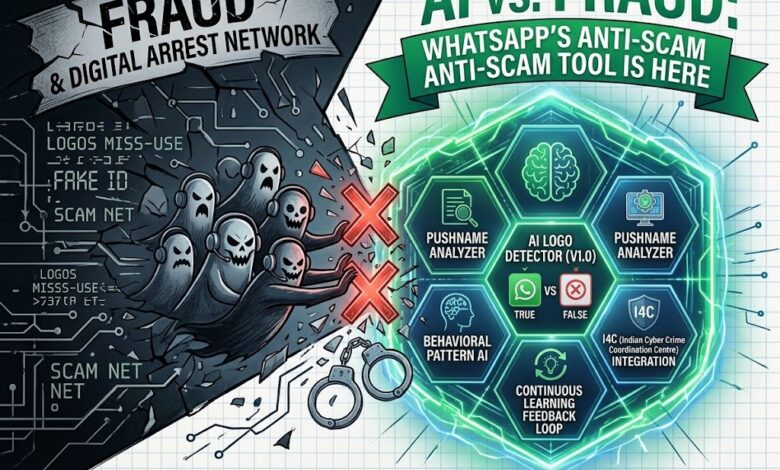
AI vs. Fraud : WhatsApp’s Anti-Scam Tool is Here. The core of this new feature is an Artificial Intelligence-based logo detection and media matching system. Fraudsters typically execute digital arrest scams by impersonating officers from agencies like the CBI, Narcotics Control Bureau, or state police. They use official logos as profile pictures to appear legitimate.
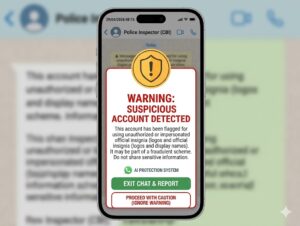
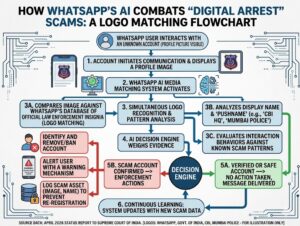

WhatsApp’s new tool automatically scans profile photos against a database of official law enforcement insignia. When a match is found on an unauthorized account, the AI identifies and removes the profile to prevent it from reaching potential victims.
By_ http://indiainput.com Desk
Combatting Impersonation Patterns
Beyond just logos, WhatsApp is using Large Language Models (LLMs) to detect behavioral patterns. This includes:
-
Display Name Logging: The platform now logs “pushnames” to identify accounts using names like “Mumbai Police HQ” or “Delhi Customs.”
-
Suspicious Interaction Alerts: Warning mechanisms now alert users when they receive messages from unknown accounts that match known scam profiles.
-
Asset Repository: WhatsApp has built a database of known scam assets—images, names, and descriptions—to ensure that once a scammer is banned, they cannot simply create a new account using the same “official” persona.
🚨 WhatsApp has banned 9,400 digital arrest scams in India since January 2026. pic.twitter.com/Oj0MHcpYj9
— Indian Tech & Infra (@IndianTechGuide) April 28, 2026
The Massive Scale of Action
In a status report filed by Attorney General R. Venkataramani on behalf of the Indian Cyber Crime Coordination Centre (I4C), it was revealed that WhatsApp has already banned over 9,400 accounts linked to digital arrest scams in a recent 12-week window. While government agencies flagged 3,800 accounts, WhatsApp’s internal AI systems were able to identify and purge an additional 5,600 related profiles.
#India | WhatsApp crackdown on digital arrest scams: 9,400 accounts banned, Supreme Court told
Read More:https://t.co/naPMqZdgUO
— Moneycontrol (@moneycontrolcom) April 28, 2026
A Coordinated Action Plan
The government’s plan, submitted to the Supreme Court, extends beyond just WhatsApp. Key measures include:
-
Biometric SIM Verification: Telecom providers must implement biometric identity verification before issuing SIM cards.
-
SIM Binding: This ensures that a WhatsApp account is tied to a specific, verified SIM on a single device, making it harder for international scam centers (often based in Southeast Asia) to operate.
-
Point of Sale (PoS) Traceability: New mechanisms will prevent a single individual from misusing multiple PoS identities to acquire bulk SIM cards.
Conclusion
This technological shift marks a transition from reactive reporting to proactive prevention. By using AI to strip scammers of their “official” identity before they even place a call, the goal is to protect vulnerable citizens—particularly seniors—from the psychological and financial trauma of a fake digital arrest.
“Call to Action” (CTA)
National Cyber Crime Reporting Portal -: https://www.cybercrime.gov.inThis is the only authorized government website for reporting all types of cybercrimes in India.
National Helpline Number : 1930 : Call this toll-free number immediately if you have been a victim of financial fraud to help freeze the transaction.
Indian Cyber Crime Coordination Centre (I4C) : https://i4c.mha.gov.in -: The nodal agency under the Ministry of Home Affairs managing the “Digital Arrest” combat strategy.
SOURCE :
FEEDBACK : contact@indiainput.com
CATCHUP FOR MORE ON : http://indiainput.com