
Gajraj : When AI Roars — Digital Protection for the Wild
How Tamil Nadu’s AI-powered surveillance network is saving elephants and making railway crossings safer.

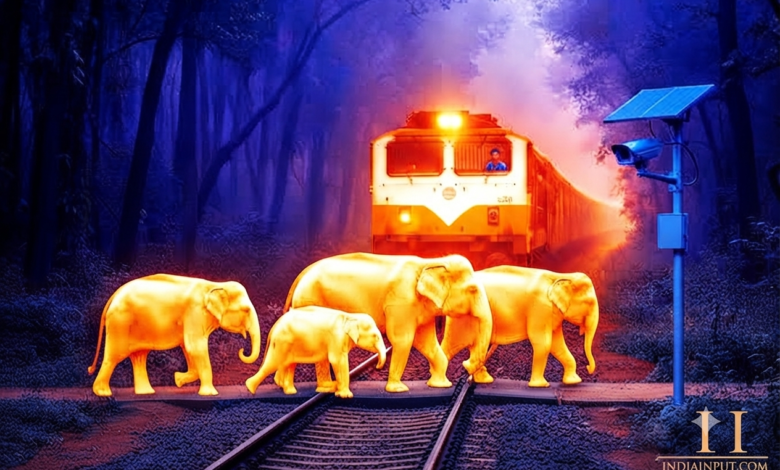
Gajraj : When AI Roars — Digital Protection for the Wild. India is home to more than half of the world’s Asian elephants, but rapid urbanisation and expanding railway networks have increasingly brought humans and wildlife into conflict. One of the most tragic consequences has been elephant deaths on railway tracks as herds cross traditional migration routes.
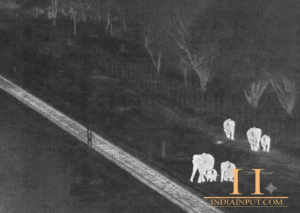
Tamil Nadu is changing this narrative through an innovative blend of artificial intelligence, thermal imaging and coordinated human action. At the centre of this transformation is the AI-powered Elephant Control and Command Centre in Madukkarai, Coimbatore, where cutting-edge technology is helping ensure that elephants and trains can safely share the landscape.
By_ https://indiainput.com Desk
The initiative is being deployed across approximately 700 kilometers of identified elephant corridors in states including Assam, West Bengal, Odisha, Jharkhand, Kerala, Chhattisgarh, and Tamil Nadu.
The Gajraj Early Warning System
The backbone of the initiative is the Gajraj AI-based monitoring system, designed to detect elephant movement before animals reach railway tracks. High-mounted surveillance towers equipped with thermal night-vision cameras continuously monitor forest corridors around the clock.
Unlike conventional cameras, thermal imaging detects body heat, enabling the system to identify elephants even in complete darkness, heavy rain, fog or dense vegetation. Artificial intelligence instantly analyses the images and determines whether elephants are approaching railway crossings.
Within seconds, alerts are transmitted to railway control rooms, forest officials, patrol teams and locomotive pilots, giving authorities enough time to reduce train speeds or temporarily halt services until the animals cross safely.
Zero deaths. That is the mission.
A dedicated team of forest officers, patrolling staff, loco pilots, drone operators and control centre monitors works round the clock at Tamil Nadu’s AI-powered Elephant Control and Command Centre in Madukkarai in Coimbatore to keep elephants… pic.twitter.com/AQ4sTT7hH2— Supriya Sahu IAS (@supriyasahuias) July 7, 2026
Remarkable Results on the Ground
The impact has been extraordinary. Since the deployment of the AI monitoring system, the protected railway sections have recorded no elephant deaths for nearly two years, marking a significant milestone in wildlife conservation.
The system has enabled thousands of safe elephant crossings, demonstrating that modern technology can dramatically reduce accidents without disrupting railway operations. Numerous real-time alerts have allowed locomotive pilots to slow or stop trains, preventing potentially fatal collisions while keeping passengers safe.
The success of the project is the result of continuous coordination between the Tamil Nadu Forest Department, railway authorities and dedicated field staff who respond immediately whenever an alert is received.
#GajrajAI is an intelligent Survelliance system introduced by the #IndianRailways to prevent #elephants from being it by trains…!!! Kudos 👏 💐 #RajatBhargavaIAS @RailMinIndia @AshwiniVaishnaw pic.twitter.com/VZ0lrBCehS
— Dr Rajat Bhargava IAS (@rajat_ias) July 2, 2026
Beyond Elephants: Building a Wildlife Intelligence Network
Although developed primarily to protect elephants, the surveillance network has become a valuable wildlife monitoring platform. The AI system has also detected species such as gaurs, deer and leopards, providing researchers and forest managers with important information about animal movement and habitat use.
To strengthen surveillance further, Tamil Nadu has introduced AI-powered drones that can monitor vast forest landscapes beyond the range of fixed thermal cameras. These drones provide live aerial feeds, allowing officials to track elephant herds, assess potential conflict zones and coordinate rapid response teams more effectively.
Humans and AI Working Together
Technology alone cannot protect wildlife. Behind every successful alert is a team of forest officers, patrol staff, control-room operators, drone pilots and locomotive crews working around the clock.
Artificial intelligence acts as an extra set of eyes, but human judgment remains essential for verifying alerts, coordinating responses and ensuring the safety of both elephants and people. This partnership between advanced digital systems and dedicated conservation professionals has become the cornerstone of the project’s success.
A Blueprint for Wildlife Conservation
Tamil Nadu’s AI-driven elephant protection programme demonstrates how digital innovation can address one of conservation’s most challenging problems. Instead of reacting to accidents, authorities can now anticipate elephant movement and take preventive action before danger arises.
As India continues to modernise its transport infrastructure, similar AI-based monitoring systems could be deployed across other elephant corridors and wildlife habitats. The Madukkarai model shows that development and biodiversity conservation do not have to be opposing goals.
By combining artificial intelligence, thermal cameras, drones and dedicated field teams, Tamil Nadu has created a powerful example of technology serving nature. Every safe elephant crossing is a reminder that innovation, when guided by compassion and commitment, can help secure a future where wildlife and human progress coexist in harmony.
SOURCE :
https://youtu.be/6wnPmgB-2R4?si=VgoYlgtyc_M1UNqW
FEEDBACK : contact@indiainput.com
CATCHUP FOR MORE ON : https://indiainput.com