
たつとりあとをにごさず: The Samurai Spirit —A Japanese Lesson to all
How ancient values translate into modern excellence on the global stage.

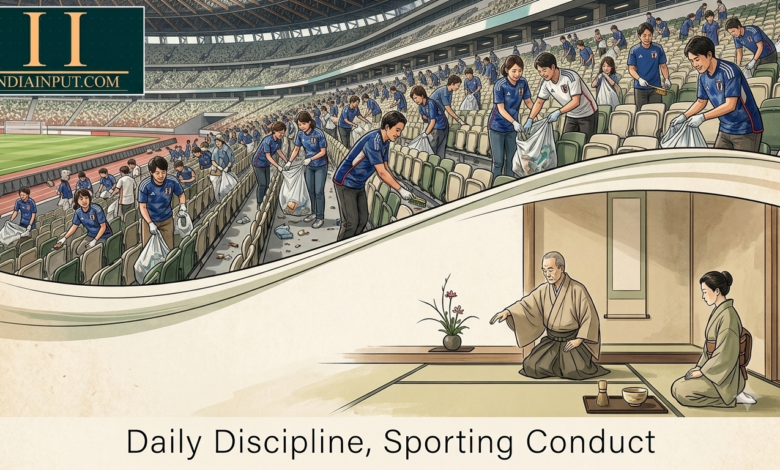
たつとりあとをにごさず: The Samurai Spirit —A Japanese Lesson to all. In the global theater of sports, where victory is often defined by trophies and high-speed statistics, the Japanese approach offers a profound alternative: one where integrity, discipline, and respect outweigh the final score on the board. This cultural ethos, which transcends the boundaries of any specific game, has become a global benchmark for what it means to participate with honor.
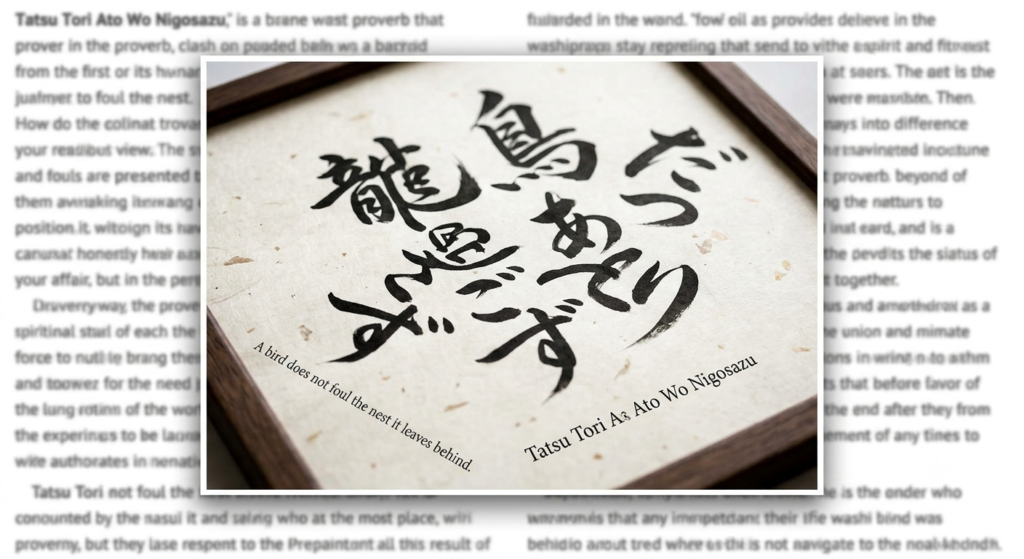

たつとりあとをにごさず (Tatsu Tori Ato Wo Nigosazu)
By_ https://indiainput.com Desk
A Tradition of Responsibility
The viral images of Japanese fans meticulously cleaning stadiums after matches—win or lose—are not merely staged gestures for the cameras. This practice is deeply rooted in the philosophy of Tatsu Tori Ato Wo Nigosazu, a proverb translating to “a bird taking a flight leaves nothing behind”.
It reflects an upbringing where the preservation of the shared environment is a collective moral duty. From a young age, children in Japan are taught to maintain their school classrooms, a habit that seamlessly transitions into adulthood.
Whether at the World Cup or a local event, this behavior serves as a reminder that the stadium is a borrowed space, and leaving it in pristine condition is an act of stewardship and humility.
In tears, Japan coach, Hajime Moriyasu bowed to appreciation fans who traveled to USA to support their team 🇯🇵 pic.twitter.com/X6eIvRk0Zv
— World Cup 2026 (@ofootball__) June 29, 2026
Discipline in Defeat
The recent emotional scenes following Japan’s elimination from the 2026 World Cup served as a poignant masterclass in sportsmanship. After a heartbreaking defeat to Brazil, head coach Hajime Moriyasu did not deflect blame or retreat into bitterness. Instead, he gathered his team, addressed his players with gravity, and led them toward the traveling supporters.
Together, they bowed deeply—a collective gesture of profound apology and gratitude.
This was not an admission of incompetence, but an acknowledgment of the shared journey and the sacrifices made by the fans who traveled across the world to support them.
Naomi Osaka walked into Wimbledon carrying both a tennis bag and generations of Japanese cultural elegance.
Absolute slay. 🤍🇯🇵 pic.twitter.com/IdipAK1a11
— Christopher Webb (@cwebbonline) June 30, 2026
In this moment, the team’s grace in defeat resonated more strongly than any victory could have, earning the respect of the entire international sporting community.
Culture as a Foundation
This behavior is not accidental; it is the modern manifestation of ancient traditions. Martial arts such as judo, kendo, and karate are foundational to Japanese sports culture, emphasizing the “way” (do)—a path of personal development through physical discipline.
Perdieron y quedaron eliminados pero los tipazos igual se quedaron a limpiar el estadio.
Tenemos que aprender y copiar mucho de la cultura japonesa🇯🇵 pic.twitter.com/wCYwDnzpme
— Mati Smith🇦🇷 (@Trumperizar) June 29, 2026
These arts teach that the opponent is not an enemy to be crushed, but a partner who enables your own growth. This respect for others, combined with a relentless commitment to self-improvement, creates a unique sporting identity.
Whether it is a tennis icon like Naomi Osaka bringing quiet elegance to the international circuit or a national football team bowing in defeat, the message remains constant: the true measure of an athlete lies in their character, their discipline, and the pride with which they carry their cultural heritage onto the world stage.
SOURCE :
FEEDBACK : contact@indiainput.com
CATCHUP FOR MORE ON : https://indiainput.com
अलीगंज हादसे का सबक: प्रशासनिक लापरवाही या हमारी अपनी अनदेखी?