
Healthy Natural, Nutritious? FSSAI Says: Prove It.
FSSAI Issues Notices to 15 Brands Over Questionable Food Claims

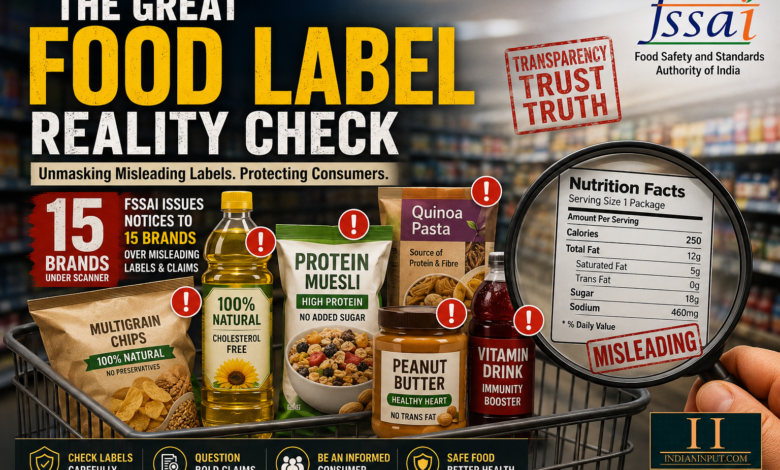
Healthy Natural, Nutritious? FSSAI Says: Prove It. In a major consumer protection drive, the Food Safety and Standards Authority of India (FSSAI) has issued notices to 15 food products and brands for allegedly misleading consumers through their trade names, branding, and promotional claims. Acting under the Food Safety and Standards (FSS) Act, 2006, the regulator is seeking greater transparency in food marketing and ensuring that product labels accurately reflect what consumers are buying.
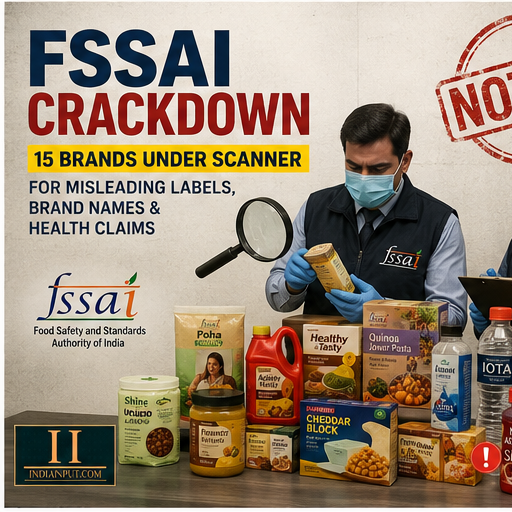

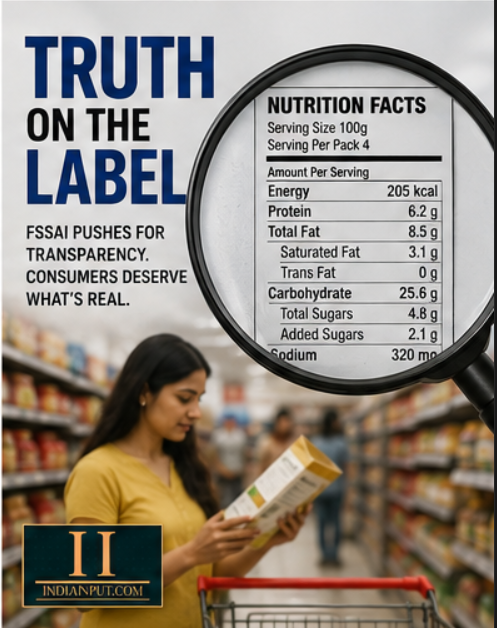
Walk through any supermarket aisle and you’ll find products promising to be “healthy,” “natural,” “organic,” “vitamin-rich,” or “nutritious.” But how many of these claims actually reflect what’s inside the package?
By_ Dr. Namrata Mishra Tiwari , Chief Editor http://IndiaInput.com
The Marketing Myth Machine
For years, food companies have mastered the art of selling an image rather than just a product.
A packet may prominently display terms like “vitamin-rich” or “fortified,” while the actual nutritional benefit remains limited. Products marketed as “healthy” often contain high levels of sugar, salt, or refined ingredients.
Similarly, foods carrying labels such as “natural” or “nutritious” can create a perception of wellness that may not always be supported by their composition.
FSSAI’s latest action signals that catchy marketing slogans alone will no longer be enough.
Pause the unhealthy plate and choose foods that nourish you. These small and consistent habits may seem simple but they have the power to prevent obesity and build a stronger and better you.#StopObesity #EatRightIndia #FSSAI pic.twitter.com/yqh1TQ2R8f
— FSSAI (@fssaiindia) June 15, 2026
Atta Outside, Maida Inside?
One of the biggest concerns in the packaged food industry is the way certain products are positioned. Noodles, breads, pizza bases, and other bakery products are frequently marketed using terms such as “atta-based” or “whole grain.”
However, consumers often discover that refined flour (maida) remains a major ingredient, despite the packaging emphasizing healthier alternatives. While such products may legally contain wheat flour, the prominence given to health-oriented messaging can sometimes overshadow the actual ingredient profile.
The regulator wants brands to ensure that labels accurately represent what consumers are buying.
FSSAI has issued notices to several food business operators (FBOs) for violating provisions of the FSS Act, 2006 regarding misleading brand names, trade names, and product claims… (1)2 pic.twitter.com/CgSVspoQxS
— FSSAI (@fssaiindia) June 14, 2026
The Rise of Buzzwords
Words like “vegan,” “organic,” “high protein,” “daily vitamins,” and “added nutrients” have become powerful marketing tools in India’s booming health-food sector.
While many products genuinely meet these standards, others may use such terms in ways that create exaggerated perceptions of health benefits. FSSAI’s notices highlight the need for scientific substantiation and transparent communication whenever such claims are made.
Why FSSAI Took Action
According to FSSAI, food labels and advertisements play a crucial role in helping consumers make informed decisions. However, terms such as “healthy,” “nutritious,” “natural,” “immunity-boosting,” or similar expressions can create a false impression if they are not scientifically substantiated.
The regulator noted that certain products were being marketed using names or claims that may not accurately reflect their composition or nutritional profile. Such practices have the potential to mislead consumers, particularly health-conscious buyers looking for genuinely nutritious options.
Products Under the Scanner
The notice covers a diverse range of food and nutrition products, including edible oils, pasta, snacks, beverages, supplements, condiments, and packaged foods. Several products were found using descriptors such as “healthy,” “natural,” “daily vitamin,” “pizza base,” or other promotional terms that may require stronger scientific backing or clearer disclosure.
While FSSAI has not imposed an outright ban on these products, the notices serve as a warning and an opportunity for companies to correct their labeling and promotional practices.
Consumer Protection at the Core
The move is part of FSSAI’s broader effort to promote transparency in India’s rapidly growing packaged food market. By enforcing stricter standards on labeling and advertising, the regulator aims to protect consumers from exaggerated or potentially misleading claims.
Food industry experts believe the action will encourage companies to adopt more responsible marketing practices and rely on evidence-based claims rather than catchy branding.
A Win for Consumers
The crackdown is not about banning products. It is about ensuring honesty.
Consumers deserve labels that inform rather than influence. When a product claims to be healthy, natural, organic, or nutrient-rich, the claim should be backed by facts—not marketing creativity.
FSSAI’s message is simple: if a brand wants to sell trust, it must first earn it.
As the regulator tightens scrutiny on food labels and health claims, India’s packaged food industry may be entering a new era where transparency matters more than buzzwords.
SOURCE :
FEEDBACK : contact@indiainput.com
CATCHUP FOR MORE ON : http://indiainput.com