
Kalamkari: Where Sacred Art Meets Natural Dyeing. An Ancient Technique That Still Rules the Loom. In an age of synthetic colors, chemical processing and fast fashion, Kalamkari offers a striking reminder that India perfected sustainable textile artistry centuries ago.
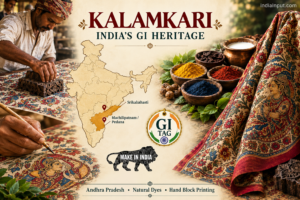
Born from an ancient tradition of hand-drawing and hand-block printing, Kalamkari transforms ordinary cotton into a canvas of mythology, nature and spirituality. Kalamkari is famous in the Indian states of Andhra Pradesh and Telangana.
By _ Dr. Namrata Mishra Tiwari, Chief Editor http://indiainput.com
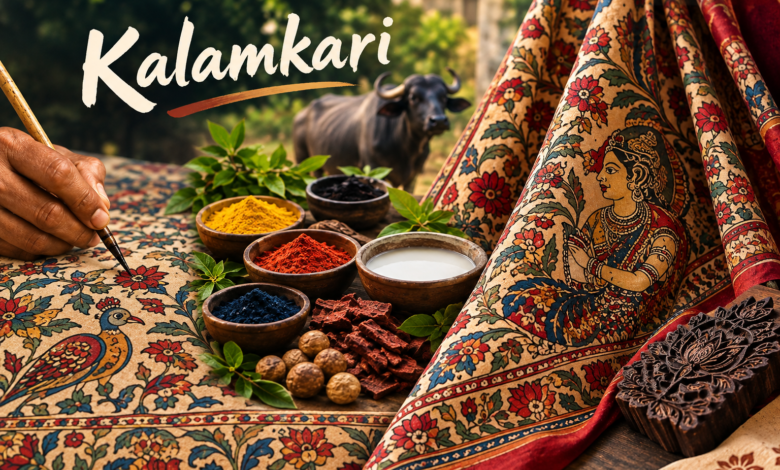
The word Kalamkari is associated with kalam—the pen—and kari, meaning craftsmanship. Artists use a sharp bamboo or date palm pen and natural vegetable dyes through an elaborate 23-step process.
In the Srikalahasti tradition, practiced in Andhra Pradesh artisans use a bamboo pen to create intricate freehand narratives. In Machilipatnam Kalamkari, beautifully hand-carved wooden blocks are used to stamp repeating persiian- influenced floral, geometric and traditional motifs onto fabric.
Both the towns hold official GI tags for their unique method of preserving this ancient 3,000 year old textile art form.
Buffalo Milk, Myrobalan and the Secret of the Cloth
What makes the traditional process extraordinary is what happens before the colour ever touches the fabric.
Cotton is washed and prepared with myrobalan and, in traditional processes, buffalo milk. This treatment helps prepare the cloth and control the way colours interact with its fibres. The fabric is then dried before the painstaking stages of printing and dyeing begin.
This is not simply printing. It is a carefully sequenced process in which preparation, mordanting, dyeing, washing, drying and repeated treatments determine the final character of the textile.
Kalamkari art #MakeinIndia #03 pic.twitter.com/259cqDht8q
— Barbarik (@barbaarik) September 11, 2026
Colours From Nature, Not a Chemical Palette
Traditional Kalamkari draws its colours from natural sources. Indigo provides blue; roots such as madder provide reds; pomegranate rind contributes yellow tones; and iron-based preparations create black. Alum and other mordants help colours fix to the fabric.
The result is a palette that feels earthy rather than artificially loud—yet remarkably rich.
More Than Fabric: A Spiritual Canvas
Kalamkari was deeply connected with India’s sacred traditions. Srikalahasti Kalamkari developed around temple art and mythological storytelling, with scenes inspired by the Ramayana, Mahabharata, deities, flora and fauna. These textiles were not merely clothes; they carried stories, symbolism and devotion.
Why Kalamkari Still Matters
The real lesson of Kalamkari is not nostalgia. It is technique.
Centuries-old knowledge of natural dyes, careful fabric preparation, wooden blocks, bamboo pens and patient handwork continues to produce textiles that remain beautiful without depending on mass industrial printing.
From a sacred temple canvas to today’s sarees, dupattas and apparel, Kalamkari has travelled through time without surrendering its soul.
India’s ancient textile wisdom was never just about making beautiful clothes. It was about turning nature, skill and spirituality into art.
SOURCE :
http://www.indiahandloombrand.gov.in
FEEDBACK : contact@indiainput.com
CATCHUP FOR MORE ON : http://indiainput.com
🚩मंदिर हटा, हनुमान नहीं हिले! आस्था के आगे आधुनिक मशीनें बेबस