
The Dark Fantasy Trap: How Predators Target Young Minds
A wake-up call for parents, educators, and young internet users navigating the digital world.

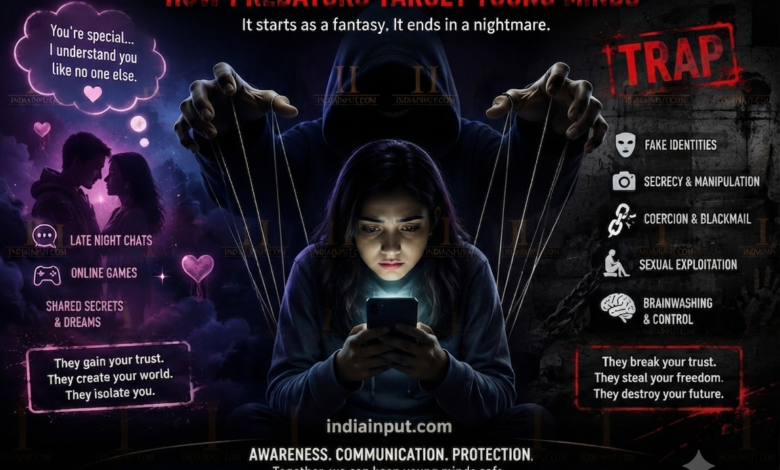
The Dark Fantasy Trap: How Predators Target Young Minds. Fantasy has always fascinated young people. Stories filled with mystery, power, forbidden love, and dangerous adventures often provide an escape from everyday life. But when fantasy begins to blur the boundaries between fiction and reality, it can become a gateway for manipulation.
Increasingly, law enforcement agencies and child safety experts are warning that predators exploit such fantasies to lure teenagers into situations involving coercion, emotional control, and sexual exploitation.
By_ Dr. Namrata Mishra Tiwari, Editor http://indiainput.com
How Predators Exploit Vulnerability
Many offenders do not rely on force in the beginning. Instead, they build trust through social media, gaming platforms, and private messaging. They identify teenagers who may be lonely, emotionally distressed, or seeking validation. By creating a fantasy world of secrecy, romance, or adventure, they slowly isolate the victim from family and friends.
This process, often called grooming, conditions the victim to accept behaviour that would normally raise alarm. The result is not merely emotional dependency but a gradual loss of independent judgment.
Brainwashing Through Emotional Control
Brainwashing rarely happens overnight. It begins with excessive attention, emotional reassurance, and promises of unconditional acceptance. Once trust is established, the manipulator introduces secrecy, guilt, fear, or threats to maintain control.
Victims may be convinced that no one else understands them or that leaving the relationship would have serious consequences. This psychological conditioning makes it difficult for young people to recognize abuse, even when they are being coerced into dangerous or illegal situations.
The Digital Age Has Changed the Risk
Today’s teenagers spend a significant part of their lives online. While digital platforms create opportunities for learning and friendship, they also provide anonymous spaces where criminals can hide behind fake identities. A seemingly harmless online friendship can quickly escalate into blackmail, extortion, exploitation, or physical danger if personal information, photographs, or meetings are involved.
Building Stronger Defences
The most effective protection is awareness. Parents, schools, and communities must encourage open conversations about online safety, consent, digital grooming, and emotional manipulation without creating fear or stigma. Young people should be taught that genuine friendships never demand secrecy, isolation, or uncomfortable compromises.
Fantasy belongs in books, films, and games—not in relationships built on deception and control. By promoting digital literacy, emotional resilience, and open communication, society can help ensure that imagination remains a source of creativity rather than a doorway to exploitation.
SOURCE :
http://www.interpol.int/crimes/
FEEDBACK : Contact@indiainput.com
CATCHUP FOR MORE ON : http://indiainput.com
An Invitation That Speaks Without Words In Every Brushstroke
From Vada Pav to Golgappa:India’s Street Food Wins the World