SIM Binding Rules 2027: India’s New Weapon Against Cyber Fraud
How Mandatory Device Linking Will Redefine Privacy, Security, and Business Messaging in India

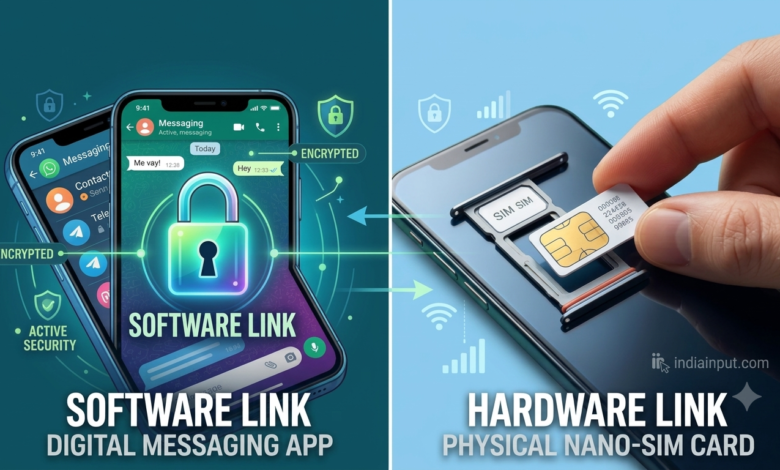
Starting January 1, 2027, India’s digital communications landscape will undergo a structural shift. Under new regulations introduced by the Department of Telecommunications (DoT), messaging platforms like WhatsApp, Telegram, and Signal must continuously bind user accounts to active, physically present SIM cards.
Historically, messaging applications relied on SIM cards solely during initial setup to send a One-Time Password (OTP). Once verified, users could remove or swap SIMs, run WhatsApp on Wi-Fi-only devices, or operate secondary accounts on tablets and web browsers while traveling internationally. The new mandate eliminates this separation, turning the SIM card into a continuous digital leash.
By_ Dr. Namrata Mishra Tiwari, Chief Editor, https://indiainput.com
Tackling Digital Fraud at Scale
The policy’s primary motivation is security. Identity theft, financial scamming, and cyber fraud—often orchestrated through secondary numbers or virtual numbers hosted abroad—have surged across the country.
By requiring real-time verification between the messaging platform and the telecom network, authorities aim to dismantle malicious networks operating through unlinked, dormant, or spoofed SIMs.
For ordinary citizens, this promises a cleaner, safer digital environment with reduced spam and fraudulent phishing attempts. However, the operational trade-offs for everyday users will be immediate.
Impact on Everyday Users
Common consumers will face new hurdles in daily device management:
- Travel Complications: Indian travelers substituting their domestic SIM for a foreign carrier while abroad may lose access to their primary messaging accounts unless they keep their Indian SIM active in a dual-SIM phone with international roaming enabled.
- Device Flexibility Limits: Running standalone messaging apps on secondary devices like Wi-Fi iPads, laptops, or secondary phones without cellular slots will become significantly more cumbersome or entirely restricted.
- Number Migration Disruptions: Switching phone numbers will instantly sever access to existing chat histories and linked identity profiles unless strict porting protocols are followed.
Repercussions for Businesses
For India’s booming enterprise ecosystem—where WhatsApp Business and Telegram serve as critical infrastructure for customer support, commerce, and internal communication—the implications are substantial.
Small and medium enterprises (SMEs) often operate customer support desks using multiple web instances tied to a single central mobile number. Continuous SIM-binding requires tighter corporate governance over device allocation.
Companies relying on distributed or offshore teams using Indian business accounts will need to reconfigure their hardware setup or shift entirely to official Enterprise APIs, driving up operational costs.
A Tighter Digital Border
While the SIM-binding mandate closes critical security loopholes used by cybercriminals, it fundamentally reshapes user privacy and convenience.
As the 2027 deadline approaches, both tech providers and users must adapt to an environment where connectivity and identity are permanently intertwined.
SOURCE :
FEEDBACK : contact@indiainput.com
CATCHUP FOR MORE ON : https://indiainput.com
पद्मश्री विंध्यवासिनी देवी: बिहार की लोकसंस्कृति की अमर आवाज़
Wear It, Post It, Return It? The Dark Side of Festive E-Commerce