
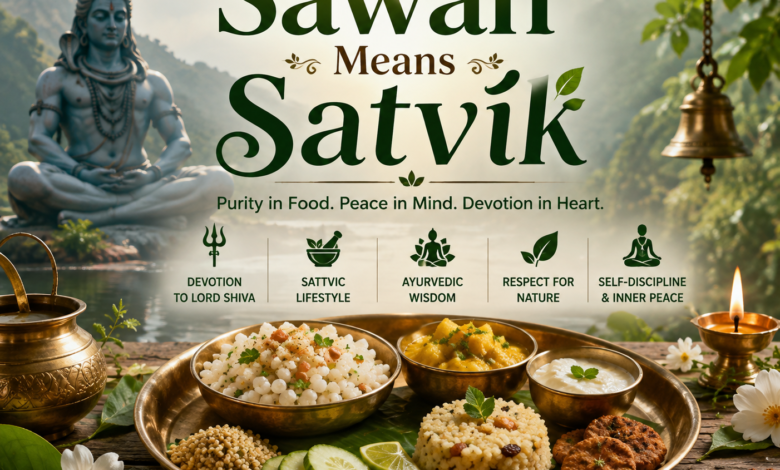
Sawan Means Satvik: The Ancient Wisdom Behind the Tradition. Sawan, or Shravan, is among the most sacred months in the Hindu calendar and is closely associated with the worship of Lord Shiva. Devotees often observe fasts, visit temples and follow a more disciplined lifestyle. Giving up non-vegetarian food becomes part of this spiritual discipline for many families. The idea is not simply about food—it is about cultivating restraint, purity and greater focus on prayer.
By_https://indiainput.com Desk
Sawan’s vegetarian tradition, therefore, is not merely about what is removed from the plate—it is about what the season encourages people to add to their lives: restraint, mindfulness, devotion and compassion.
The Sattvic Way of Eating
During Sawan, many devotees prefer a sattvic diet consisting of fresh, simple and lightly prepared foods. Fruits, milk, vegetables, grains or fasting foods such as sabudana, kuttu, singhara and makhana are commonly eaten depending on regional customs and whether a person is fasting. The emphasis is on simplicity rather than indulgence.
Why do many Hindus avoid non-veg during Sawan?
A tradition rooted in devotion, Ayurveda, seasonal wisdom, and respect for nature🙏 pic.twitter.com/cub7d88HsM
— 𝐊𝐫𝐢𝐬𝐡𝐧𝐚𝐩𝐫𝐞𝐞𝐭𝐢 (@Krishnavallabhi) August 10, 2026
What Ayurveda Says About the Monsoon
Sawan coincides with the Indian monsoon, traditionally known in Ayurveda as Varsha Ritu. Ayurveda describes this period as one in which digestive strength, or Agni, can become weaker. Consequently, heavy, oily and difficult-to-digest foods are traditionally reduced in favour of warm, freshly cooked and lighter meals. Meat and other non-vegetarian foods are therefore avoided by many people as part of this seasonal dietary approach.
Humidity and Food Safety
The monsoon brings high humidity and conditions that can accelerate food spoilage and microbial growth. Historically, before modern refrigeration and reliable food storage, keeping meat and fish fresh would have been considerably more difficult. Choosing simpler vegetarian meals during the rainy season could therefore also have had a practical food-safety advantage.
Respect for Life and Nature
Another traditional explanation connects Sawan with compassion toward living beings. Some customary accounts associate the monsoon with breeding cycles among animals and aquatic life, encouraging people to reduce activities that involve killing animals. While this is better understood as a cultural and ethical tradition than a universal ecological rule, it reflects the broader Hindu value of ahimsa—respect for life.
Fasting Builds Self-Discipline
Sawan is also a month of vrat and self-control. Avoiding favourite foods can become a personal exercise in restraint, helping devotees focus less on indulgence and more on prayer, reflection and spiritual practice.
More Than a Food Rule
Ultimately, avoiding non-veg during Sawan carries different meanings for different Hindu communities. For some, it is primarily an act of devotion; for others, it reflects Ayurveda and monsoon-season habits; and for many, it combines both. The tradition demonstrates how Indian customs have historically brought together faith, food, health, self-discipline and respect for nature.
Sawan’s vegetarian tradition, therefore, is not merely about what is removed from the plate—it is about what the season encourages people to add to their lives: restraint, mindfulness, devotion and compassion.
SOURCE :
http://www.incredibleindia.gov.in
FEEDBACK : Contact@indiainput.com
CATCHUP FOR MORE ON : https://indiainput.com