
Two Calls, Two Contexts: From Deficit 2013 to Defense 2026
How PM Modi’s 2026 austerity measures and the one-year gold moratorium aim to shield the Rupee from 105 dollar-plus crude oil prices.

Two Calls, Two Contexts: From Deficit 2013 to Defense 2026!! The Indian economy has a historical and cultural obsession with gold, often viewing it as the ultimate safe-haven asset. However, twice in the last thirteen years, the Indian leadership has been forced to ask the public to suppress this “passion for gold” to protect the nation’s macroeconomic stability.
While the underlying request remains the same—stop buying gold to save foreign exchange—the contexts of 2013 and 2026 reveal a shift from managing domestic fiscal imbalances to navigating a volatile global war crisis.
The 2026 Appeal: External Shocks, Domestic Strength
Modi’s 2026 call operates on entirely different terrain. The Middle East conflict has sent oil prices surging and disrupted shipping lanes, creating genuine external pressures that no single nation can fully control. Unlike 2013, India’s economic fundamentals today are considerably stronger—foreign exchange reserves remain substantial, the current account deficit is manageable, and the economy has demonstrated resilience through multiple global shock
Rather than a distress signal, Modi’s appeal reads more as strategic positioning—inviting the diaspora to participate in India’s continued growth story while helping insulate the economy from global volatility.
The 2013 Context: Managing the Twin Deficits
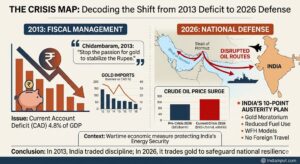
In June 2013, then Finance Minister P Chidambaram made a direct appeal to the Indian public: “I appeal once again, do not buy gold.” At that time, India was not facing a physical war, but it was battling an economic one. The country was struggling with a record-high Current Account Deficit (CAD) of 4.8 percent of GDP. The rupee was plummeting against the dollar, and gold imports—which reached 845 tonnes in 2012-13—were a primary culprit.
Chidambaram’s strategy was largely fiscal and regulatory. The government hiked import duties to 10 percent and introduced the 80:20 rule to curb demand. The appeal was a plea for economic discipline to prevent a sovereign credit rating downgrade. It was a domestic crisis fueled by high inflation and a “passion for gold” that the government could no longer afford to finance through foreign inflows.
The 2026 Crisis: War and Energy Security
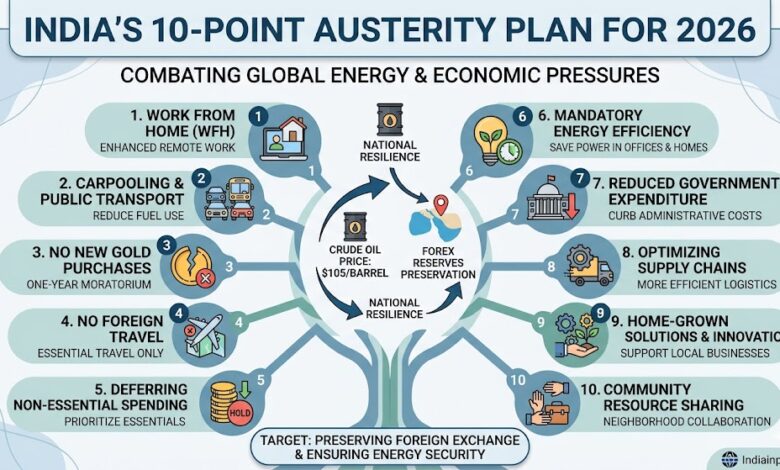
Fast forward to May 2026, and the tone of Prime Minister Narendra Modi’s appeal is far more urgent, framed by the shadows of a global conflict. Amidst an ongoing war in West Asia and disruptions in the Strait of Hormuz, the Prime Minister has called for a one-year moratorium on gold purchases. Unlike 2013, the 2026 crisis is driven by external shocks: crude oil prices surging above 105 dollars per barrel and a massive disruption in global energy supply chains.
The Prime Minister’s appeal is part of a broader “10-point austerity plan” that includes reducing fuel use, reviving work-from-home practices, and avoiding foreign travel. While Chidambaram focused on the “safest investment” fallacy of gold, PM Modi has framed the sacrifice as a matter of “national interest” to shield the rupee during a period of global geopolitical instability.
What Has Changed
Both calls recognize the diaspora’s importance, but the underlying message has shifted from “help us survive” to “join our momentum.” Whether this optimism proves warranted will depend on how long Middle East tensions persist and how effectively India navigates the turbulence ahead.
Comparative Analysis
The 2013 appeal was a technical response to a balance-of-payments problem during a period of relative global peace. In contrast, the 2026 appeal is a wartime economic measure. In 2026, the government is absorbing massive losses on fuel and fertilizers to protect consumers, and the call to skip gold is a direct request for citizens to help “offset” these burdens. Both instances highlight a fundamental truth of the Indian economy: in times of trouble, the nation’s love for gold becomes its greatest liability.
SOURCE :
https://youtu.be/4Z31Febq8HY?si=rcsVVQAFyw9vBgmB
FEEDBACK: contact@indiainput.com
CATCHUP FOR MORE ON : https://indiainput.com
सोमनाथ और भारत की अदम्य आत्मशक्ति! -द्वारा श्री नरेंद्र मोदी