What Really Makes a Year “New”? India’s Time Explained
Time Hits Different When Nature Sets the Date

What Really Makes a Year “New”? India’s Time Explained. Across much of the world, the New Year is celebrated on January 1 according to the Western, or Gregorian, calendar. For many, this date symbolizes fresh beginnings and renewed hope. While there is nothing wrong with celebrating it. However, it is worth reflecting on a deeper question: does a year truly become “new” simply because a calendar page changes?
– By Dr. Namrata Mishra Tiwari, Chief Editor https://indiainput.com
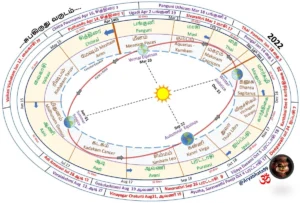
According to our Sanātan Panchāng, today is 2082 Vikrami Samvat, counted from the era of Samrat Vikramaditya (57 BCE). We are currently in Shishir Ritu, the cold season, while the Sun has begun its northward journey known as Uttarayana. The Rohini Nakshatra is prevailing, and the lunar month of Pausha is in progress. Today falls on Trayodashi, the 13th day of the Shukla Paksha (bright lunar fortnight), with Poornima, the full moon, approaching in two days.
The Gregorian calendar has its origins in ancient Rome. The early Roman calendar was later reformed by Julius Caesar in 46 BCE, creating the Julian calendar. Centuries afterward, in 1582, Pope Gregory XIII introduced further corrections to better align the calendar with the solar year. This reformed system—the Gregorian calendar—was gradually adopted worldwide for civil administration, trade, and global coordination. Its New Year, January 1, was chosen for administrative convenience rather than natural or seasonal change. As a result, the year begins during winter in the Northern Hemisphere, when nature remains dormant.
The Real Truth About the New Year
Have you ever thought about why we celebrate the New Year on January 1st?
Actually, for many of us in India, our real New Year doesn’t start then.
January 1st is part of the Gregorian calendar, but if you look outside, nothing really changes… pic.twitter.com/ko2qqfQ8hx
— Arpit (@ag_arpit1) December 31, 2025
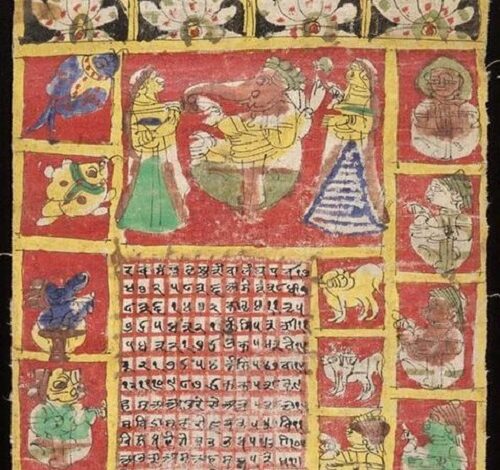
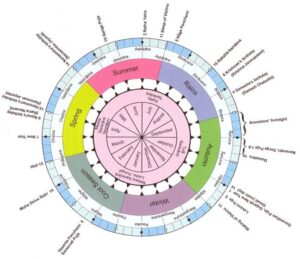
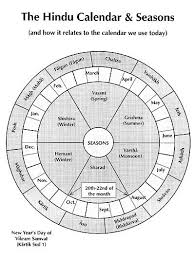
In contrast, the Hindu calendar is far older and deeply connected to astronomy and natural cycles. Its foundations are found in ancient Indian texts such as the Vedanga Jyotisha, which studied the movements of the Sun, Moon, and stars thousands of years ago. The Hindu calendar is lunisolar, meaning it considers both lunar phases and solar transitions. The Hindu New Year—celebrated as Gudi Padwa, Ugadi, Cheti Chand, and other regional names—begins when the Sun enters a new zodiac sign and spring arrives.
January marks beginning of Gregorian calendar, not a cultural celebration.
In Sanatan Dharma #HinduNewYear associated with creation of universe and change of seasons, is considered to be Chaitra Shukla Pratipada .
Sant Shri Asharamji Bapu message harmony with nature. pic.twitter.com/YUKy70KL4t— Mohan Madaan (@MohanMadaan02) January 1, 2026
This timing is not accidental. Historically, Indian society was closely linked to agriculture and seasonal rhythms. Spring marked renewal: trees blossomed, fields prepared for sowing, and life visibly began anew. The Hindu New Year thus represented the start of a new agricultural, cosmic, and spiritual cycle, aligning human life with nature’s transformation.
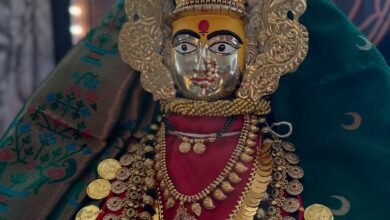
Varahi amma🙏🏼🙏🏼
BTW..
Gregorian calendar: ~440 years old.
Panchangam: timeless, cosmic, planetary.”“440-year-old calendar vs eternal cosmic time.”
“Not our New Year — just a 440-year-old system.”
“Civil calendar is young.
Cosmic time is ancient.”“Dates change.
Planetary… pic.twitter.com/e2F7oxHEzU— Annapurna Astro / Swati🚩 (@IAnnapurna1) January 1, 2026
The contrast between the two calendars reflects different worldviews. The Western calendar prioritizes uniformity and global administration, while the Hindu calendar emphasizes harmony with the cosmos and natural order. One marks time mechanically; the other experiences time organically.
Celebrating January 1 is part of modern global culture. Yet remembering the Hindu New Year reminds us that true renewal is not just historical or administrative—it is ecological and experiential. A year truly becomes new when nature itself turns a page.
SOURCE :
CATCHUP FOR MORE ON : https://indiainput.com
धर्म के चार स्तंभ: गुरु गोबिंद सिंह जी के साहिबज़ादे
Exports Boom Prices Drop: 2025’s Best News for India
Justice for Anjel Chakma: The Fatal Cost of Racial Prejudice
Justice for Anjel Chakma: The Fatal Cost of Racial Prejudice
Trade Threats & Torched Homes: Why Patience Is Wearing Thin?
Trade Threats & Torched Homes: Why Patience Is Wearing Thin?
पान के पत्ते : आयुर्वेद का ‘हरा सोना’ और इसके स्वास्थ्य लाभ।
पान के पत्ते : आयुर्वेद का ‘हरा सोना’ और इसके स्वास्थ्य लाभ।