

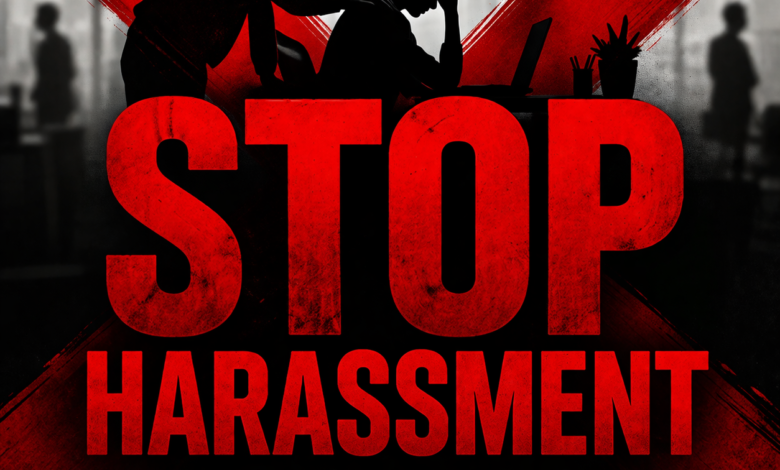
Hope Removed, Transparency Collapsed—Corporate Collapse. In the wake of rising concerns around workplace harassment and misconduct, safety can’t remain a checklist item—it has to become culture. Corporates must move beyond compliance and build systems that actually protect employees, while individuals must understand boundaries, accountability, and responsibility.

By_ https://indiainput.com Desk
What Corporates Must Put in Place
First, clear and visible policies are non-negotiable. Anti-harassment guidelines should be simple, accessible, and reinforced regularly—not buried in onboarding documents.
Second, every organization must have a functional Internal Committee (IC) under India’s Sexual Harassment of Women at Workplace Act. This body should be independent, gender-sensitive, and trained to handle complaints confidentially and fairly.
Third, mandatory training and awareness programs should be conducted frequently—not as a formality, but as scenario-based learning that helps employees recognize red flags and respond correctly.
Fourth, safe reporting channels are crucial. Anonymous reporting options, whistleblower protection, and zero tolerance for retaliation encourage victims and witnesses to come forward.
Finally, corporates must ensure swift, transparent action. Delayed responses erode trust. Every complaint deserves timely investigation and resolution.
“Your husband is not here. If you have any physical needs, we will fulfill them”: Shahrukh, Raza, and Asif told this woman in the Nashik TCS BPO
I have shared how they groom unmarried Hindu women. Now check how they target married Hindu women.
This one was brave enough not to… pic.twitter.com/CBd3EIg4mx
— Subhi Vishwakarma (@subhi_karma) April 14, 2026
Do’s and Don’ts for Employees (All Genders)
Do’s:
- Maintain professional boundaries—respect personal space, consent, and communication limits.
- Speak up or report if you witness or face inappropriate behavior. Silence protects misconduct.
- Keep written records (messages, emails) if something feels off.
- Support colleagues—create a culture where concerns are taken seriously.
Don’ts:
- Avoid unsolicited personal remarks, jokes, or comments that may be offensive.
- Don’t pressure colleagues into personal interactions or relationships.
- Never misuse authority, position, or influence for personal gain.
- Don’t dismiss complaints as “overreactions”—every concern deserves attention.

The Bigger Picture
A safe workplace is not built by policies alone but by everyday behavior. Corporates must lead with accountability, and employees must act with awareness. The goal isn’t just to prevent incidents—but to create an environment where respect is the default, not the exception.
PS :- The Sexual Harassment of Women at Workplace (Prevention, Prohibition and Redressal) Act, 2013
Available via Government of India legislative portals (e.g., India Code):https://www.indiacode.nic.in
SOURCE : Ministry of Women & Child Development, SHe-Box Portal, National Commission for Women
FEEDBACK : contact@indiainput.com
CATCHUP FOR MORE ON : https://indiainput.com
From Chalkboards to Chatbots: CBSE’s Digital Learning Leap
No Silver Medals in Security: Doval’s “New Awakening” Call
Opportunity Knocked. Hinge Broke the Door #IPL Season 19
Kerala’s Free Degree Revolution: Zero Fees, High Stakes
Toll Wars @Sea: Who Controls the World’s النفط Oil Lifeline?
Toll Wars @Sea: Who Controls the World’s النفط Oil Lifeline?