
Time for a Corporate Crackdown— Fix Dress Codes, Fix Safety
Inconsistent policies demand government intervention and strict rulebooks.

Time for a Corporate Crackdown— Fix Dress Codes, Fix Safety. Across India, corporates are struggling to balance uniformity with identity. But inconsistency is the worst possible outcome. Allowing certain expressions while restricting others—intentionally or not—creates perceptions of bias, fuels mistrust, and fractures workplace culture. Even outdated or poorly worded documents, if still circulating, reflect weak governance and lack of oversight.


“If a policy had to be clarified publicly, it means it was flawed privately.”
Impartiality & Credibility
“The real issue isn’t one brand—it’s how Indian corporates handle identity, consistency, and clarity in policy.” That truth cuts deeper than any single controversy. Because when employees are left guessing what is allowed and what isn’t, the problem is no longer about dress code—it’s about trust, fairness, and institutional credibility.
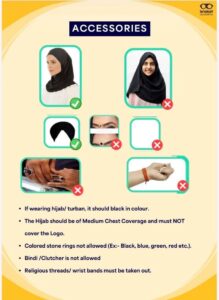
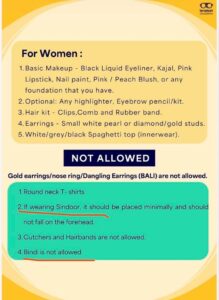
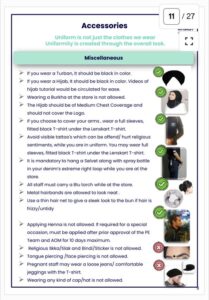
“If a policy had to be clarified publicly, it means it was flawed privately.” No company should need a viral moment to explain its own rulebook. Policies are not PR statements; they are binding frameworks that shape everyday workplace experience. When internal documents contradict public claims, it exposes a dangerous gap between what companies say and what they actually enforce.
So I confirmed, this is genuine. This is what @peyushbansal tells his employees, hijab is okay, but bindi/tilak/Kalawa is not, for @Lenskart_com, a company that exists in Hindu majority Bharat, where most of the employees and consumers are Hindu! What do you say to this? This is… https://t.co/jQ2EPdWPJM pic.twitter.com/SWfOajOjpo
— Shefali Vaidya. 🇮🇳 (@ShefVaidya) April 15, 2026
Regulatory Intervention
This is no longer just a corporate issue. It calls for clear regulatory intervention. The government must step in to establish baseline, non-negotiable guidelines for workplace dress codes and employee conduct policies. Much like the Sexual Harassment of Women at Workplace Act set a national standard for safety and grievance redressal, India now needs a uniform policy framework that ensures:
- Equal treatment of all religious and cultural expressions
- Transparent, written, and publicly accessible rulebooks
- Mandatory periodic audits of internal policies
- Strict penalties for discriminatory or inconsistent enforcement
http://
Don’t understand why Indian corporate companies try to meddle in things that doesn’t concern them like religious symbols, that too only of Hindus. Sell your product, don’t sell gyan under the guise of ‘being progressive and inclusive’. #AntiHinduLenskart @peyushbansal @TCS
— Shefali Vaidya. 🇮🇳 (@ShefVaidya) April 16, 2026
One Standard, Equal Accountability
Corporates cannot be left to define fairness on their own terms. Without accountability, “policy” becomes a flexible tool—tight for some, loose for others.
The demand is simple: one standard, clearly written, consistently enforced. Either allow all forms of identity within reasonable limits, or restrict all equally. No ambiguity. No selective enforcement. No post-facto clarifications.
Because in the end, a workplace is not just defined by its products or profits—but by how fairly it treats the people who build it.
PS :- MWCD | SHe-Box Portal | Ministry of Labour & Employment | POSH Act (India Code)
National Commission for Women (NCW)
👉 https://ncw.nic.in
(Handles complaints, policy advocacy, and legal awareness)
SOURCE :
http://👉 https://www.indiacode.nic.in
👉https://labour.gov.in/en/occupational-safety-health-and-working-conditions-code
FEEDBACK : catch@indiainput.com
CATCHUP FOR MORE ON : https://indiainput.com
Hope Removed, Transparency Collapsed—Corporate Collapse
From Chalkboards to Chatbots: CBSE’s Digital Learning Leap
No Silver Medals in Security: Doval’s “New Awakening” Call
Opportunity Knocked. Hinge Broke the Door #IPL Season 19
Kerala’s Free Degree Revolution: Zero Fees, High Stakes