
The Indian Citizenship Myth: Beyond the Passport
From passports to Aadhaar, the truth behind the legal status of your ID cards

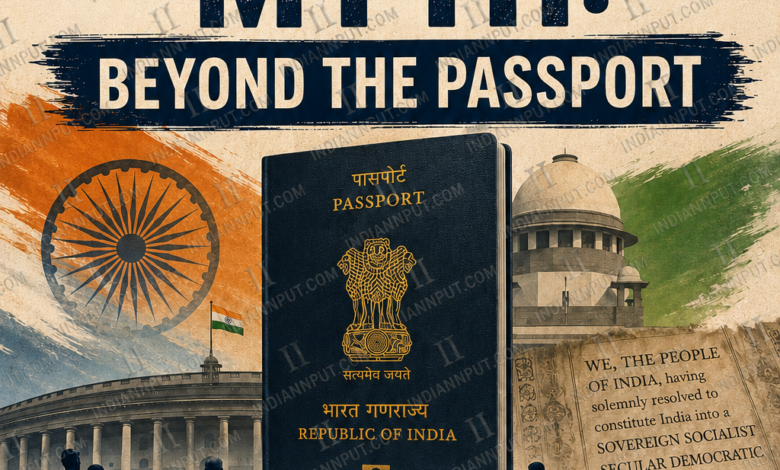
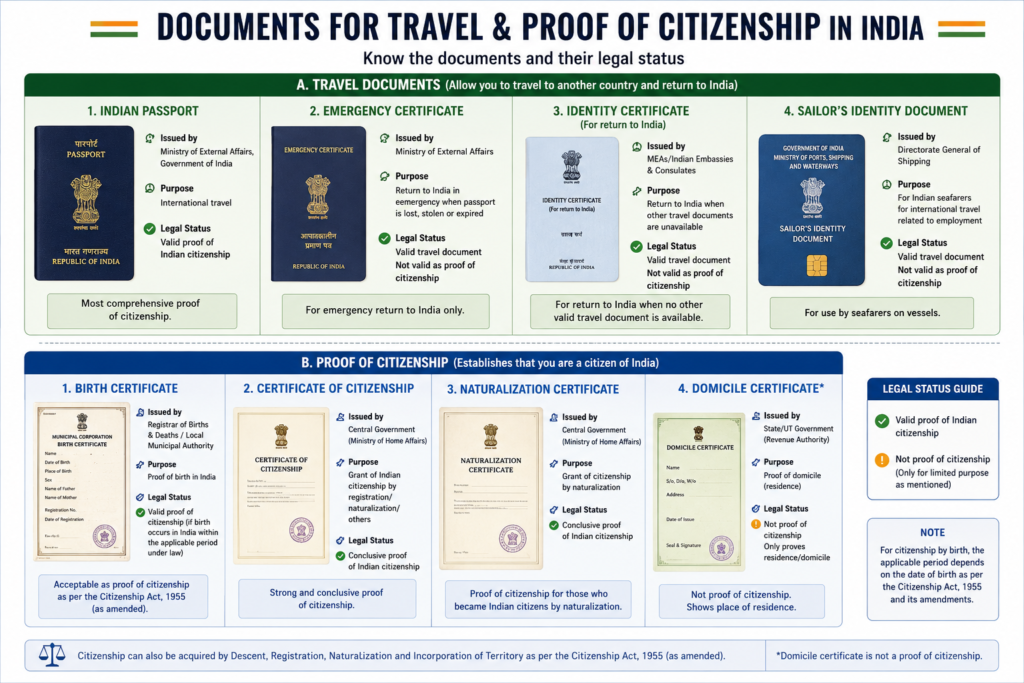
The Indian Citizenship Myth: Beyond the Passport. The recent statement from a Ministry of External Affairs official during the 14th Passport Seva Diwas has sparked significant public debate regarding the nature of identity documents in India. The assertion that a passport is primarily a travel document rather than definitive proof of citizenship challenges common public perceptions. This clarification forces a closer examination of what legal documents truly signify in the context of Indian citizenship.
By_https://indiainput.com Desk
The Legal Reality of Passports
The confusion largely stems from a misunderstanding of the legal framework governing passports. Under Section 6(2)(a) of the Passports Act, 1967, authorities are required to verify citizenship before issuing a passport, but the document itself does not serve as a certificate of citizenship.
Furthermore, the government retains the power to issue passports to non-citizens under exceptional circumstances as defined by Section 20, and Section 17 dictates that a passport remains the absolute property of the Central government, which can revoke or impound it at any time.
Beyond the Passport: The Status of Other IDs
Many citizens rely on other common documents for identity verification, but these also fall short as conclusive proof of citizenship.
-
The Aadhaar Card is strictly an identity and residency document and does not verify citizenship.
-
Voter ID cards are regarded by courts as administrative tools for electoral purposes rather than settlement of citizenship claims.
-
Even official responses from the Home Ministry have indicated that documents like PAN cards or birth certificates are not definitive proof of citizenship status, but rather corroborative in nature.
Determining Citizenship: The Role of Birth Date
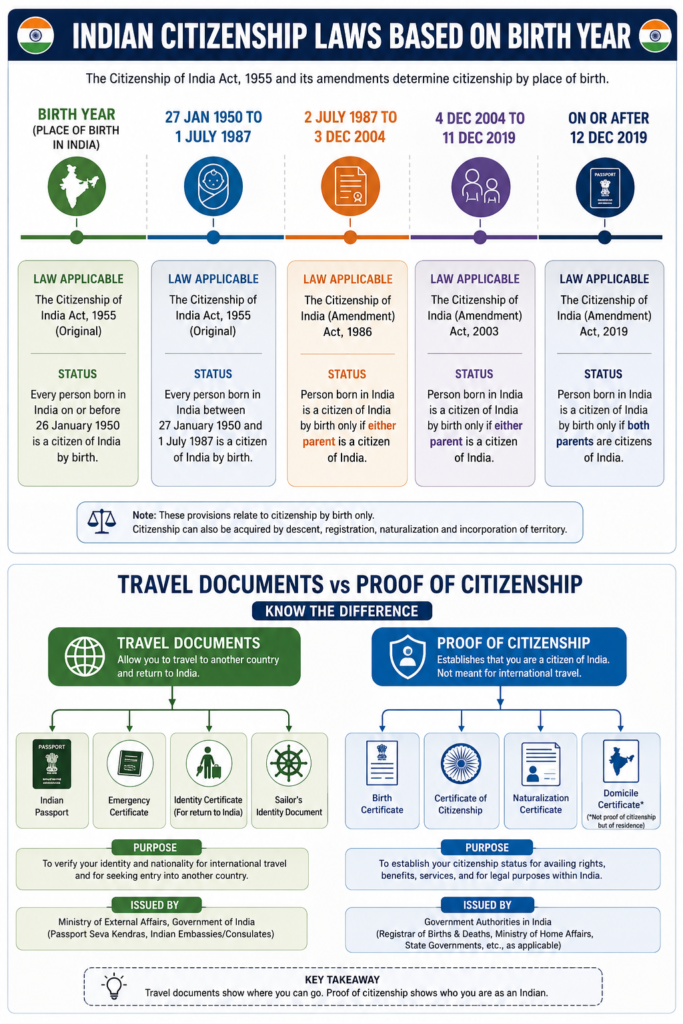
In India, citizenship status is fundamentally determined by the Citizenship Act, 1955, based on the individual’s date of birth and the status of their parents. The requirements have evolved over time:
-
For those born between 26 January 1950 and 30 June 1987, being born in India was sufficient for citizenship.
-
Between 1 July 1987 and 2 December 2004, at least one parent had to be an Indian citizen at the time of birth.
-
For individuals born on or after 3 December 2004, both parents must be Indian citizens, or one must be a citizen while the other is not an illegal migrant.
Ultimately, if formal proof of citizenship is required, authorities may look to legacy birth certificates, parents’ lineage records, Certificates of Registration or Naturalisation, or, in rare cases, a formal Nationality Certificate.
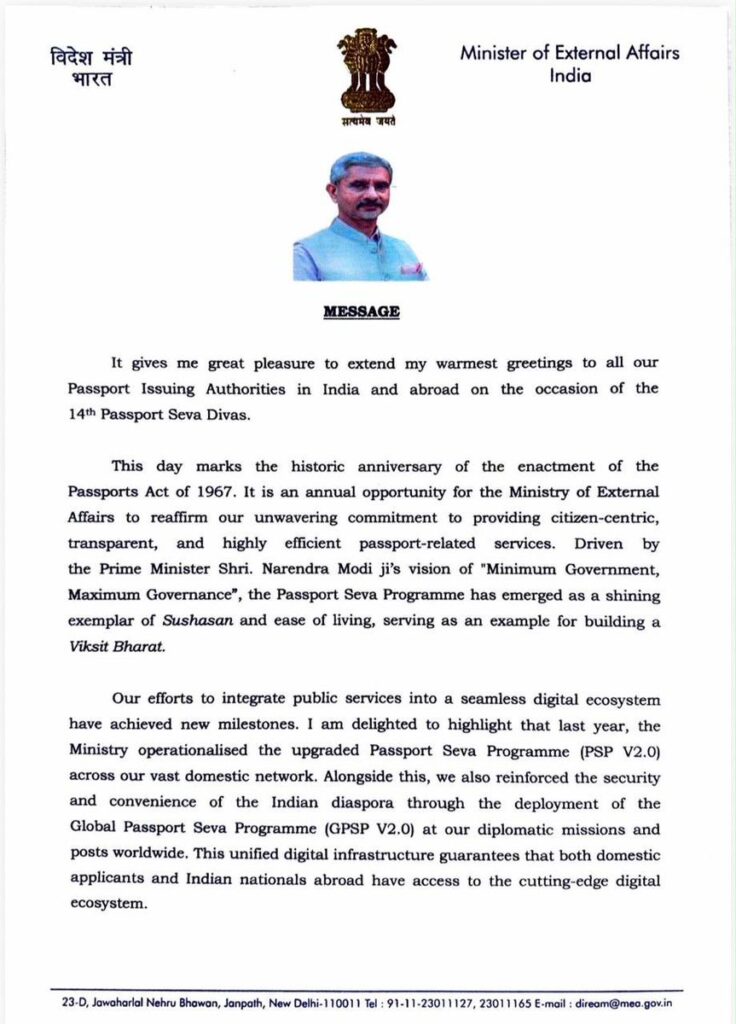
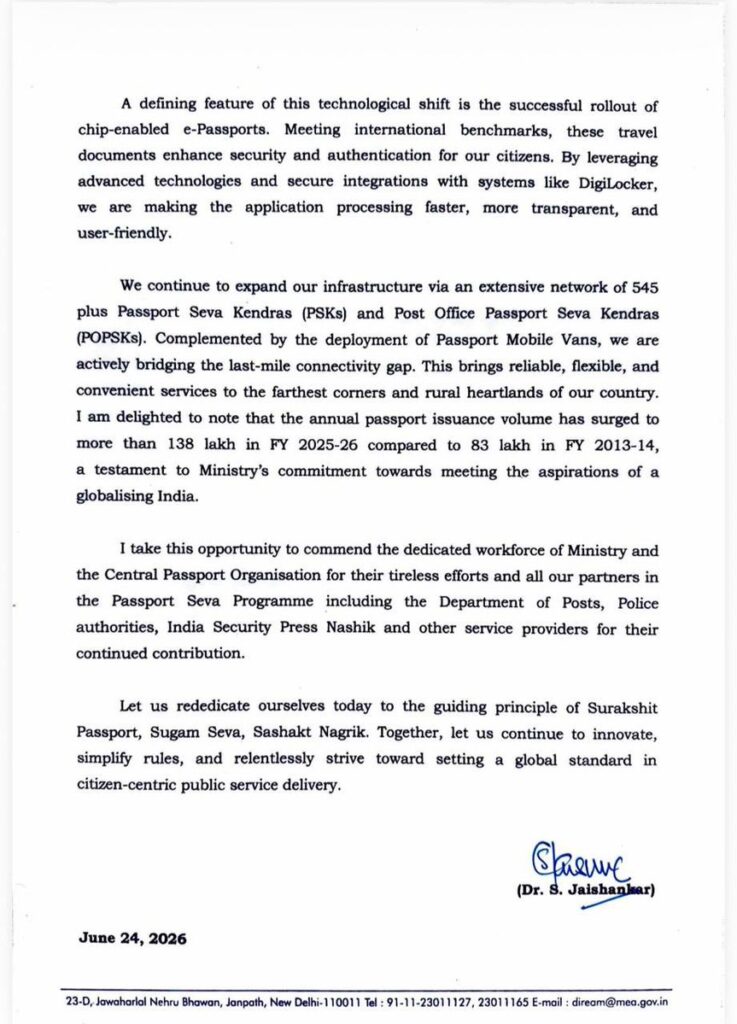
EAM Dr. S. Jaishankar:
Felicitations to all Passport Authorities in India and abroad on the occasion of the 14th Passport Seva Divas.
The rollout of Passport Seva Programme 2.0, introduction of chip-enabled e-Passports, opening of new PSKs and POPSKs, and record levels of passport issuance are enhancing ease of travel, expanding access to global opportunities, and empowering citizens.
#TeamMEA reaffirms its commitment to keep making passport services delivery faster, more transparent and accessible, guided by the vision of ‘Surakshit Passport, Sugam Seva, Sashakt Nagrik’.
#12YearsofSeva
SOURCE :
FEEDBACK : contact@indiainput.com
CATCHUP FOR MORE ON : https://indiainput.com