The NEET Debate: Lost in the Noise, Buried by Spectacle
Has the original NEET issue been overshadowed by politics and social media narratives?

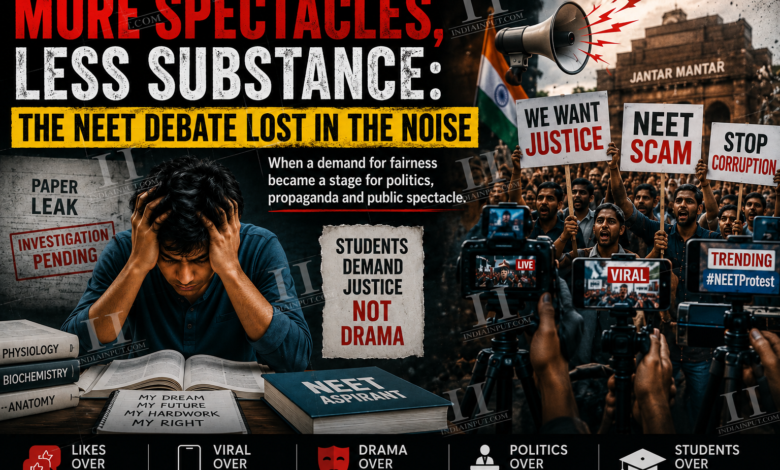
The NEET Debate: Lost in the Noise, Buried by Spectacle. The NEET paper leak controversy sparked widespread concern among students, parents, and educators across India. Millions of students invest years of hard work preparing for competitive examinations, and any allegation of irregularities naturally raises questions about fairness and transparency. The initial protests emerged from a legitimate demand for accountability and a credible investigation into the alleged paper leak.
By_ Dr. Namrata Mishra Tiwari, Editor https://indiainput.com
The Role of Social Media
In today’s digital age, social media has become a powerful force in shaping public opinion. It can help bring attention to important issues, mobilize support, and amplify voices that might otherwise go unheard.
However, it can also encourage selective narratives, misinformation, and emotionally charged content. Short clips, viral posts, and influencer commentary often present only a portion of events, making it difficult for the public to understand the complete picture.
This is how they fool you! https://t.co/AMFK6y8K17 pic.twitter.com/AjuGxmU5aq
— BHAKTI (@bhakti_iii) July 21, 2026
Controversies and Competing Narratives
Recent debates involving protest leaders and law enforcement have further complicated the discussion. Different sides have presented contrasting versions of events, with supporters and critics each highlighting evidence that supports their position.
In such situations, it is important to rely on verified facts and impartial investigations rather than assumptions or social media trends. Public accountability should apply to all individuals involved, regardless of their role or popularity.
???????????? https://t.co/mUbjZzZzxN
— Abhijeet Dipke (@abhijeet_dipke) July 22, 2026
When Student Issues Become Political
One of the biggest concerns is the increasing politicization of student movements. What starts as a campaign for educational reform can sometimes evolve into a broader political battle.
Political parties, activist groups, and online influencers may attempt to use student concerns to advance their own agendas. As a result, the original issue—ensuring fair examinations and protecting students’ interests—can receive less attention than political narratives and media controversies.
The Need for Responsible Youth Leadership
India possesses one of the world’s largest youth populations. Young people need leaders who encourage constructive dialogue, critical thinking, and practical solutions.
Effective youth leadership should focus on policy reforms, educational improvements, and evidence-based advocacy rather than emotional polarization or social media popularity. Students deserve guidance that empowers them to engage meaningfully with public issues while remaining focused on long-term goals.
Keeping the Focus on Reform
The NEET paper leak issue raised important questions about trust in competitive examinations and the need for stronger safeguards. Regardless of political viewpoints, the priority should remain transparent investigations, institutional accountability, and reforms that strengthen the examination system. Student movements are most effective when they remain focused on their core objectives rather than becoming vehicles for broader political conflicts.
Conclusion
Democratic protests are an essential part of public life, and student voices deserve to be heard.
However, in an era dominated by viral content and competing narratives, maintaining focus on the original cause is increasingly challenging.
The success of any movement ultimately depends on whether it delivers meaningful solutions to the people it claims to represent. For India’s students, the goal should remain clear: fairness, transparency, and a stronger educational system for future generations.
SOURCE :
FEEDBACK : Contact@indiainput.com
CATCHUP FOR MORE ON : https://indiainput.com