Pitru Paksha Demystified: Pind Daan, Tarpan, Ecology..
Facts behind the Flow of Gratitude, Renewal and Ecological Awareness that drove Generations of Sanatanis

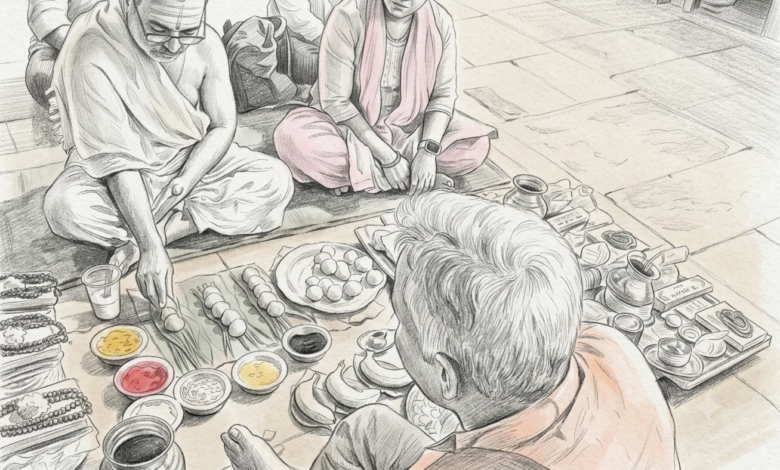
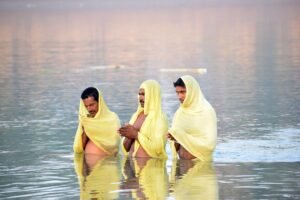 Pitru Paksh, since times immemorial, has involved the primary rituals of Pind Daan and Tarpan. These appear rich in symbolic meaning, but, in fact are rooted deeply in an understanding of human ecology, energy cycles, and social responsibility. Similarly practices such as Kaka Bali, Panch Bali and Daan, have had their own impact on the Bharateeya society.
In the third and the concluding part of this three part series on Pitru Paksha, Ajay Ramakant, researcher in Ancient Science, Monuments and Texts, attempts to simplify the deeper meanings that have passed the tests of time..
Pitru Paksha or the fortnight of remembering and honoring the ancestors in the Sanatani Hindu tradition, Pind Daan is considered as the Offering of Earth and Nourishment.
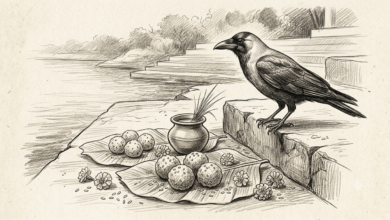
Pind Daan involves making spherical balls (Pinda) out of cooked rice, barley flour, sesame seeds, and ghee, which are then offered to ancestors. These eventually reach them through birds, and aquatic life. The act and its symbolic meaning have been revered by generations not just in the land of Bharat but, everywhere else, too, where the Sanatanis went and made their home.
To be simplistic, the Pinda reflects the Physical Body. In Sanskrit, Pinda means “body” or “mass.” Rice eventually comes from the cultivation in the muds of paddy fields. Offering rice balls symbolizes acknowledging that our physical existence comes directly from our ancestors’ physical genetic line.
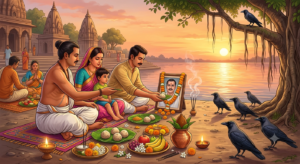
After the rituals, the Pinda is immersed in natural water bodies or given to animals, symbolizing the return of the human body to the five elements (Panchabhuta). Thus, it signifies the dissolution of Material Attachments.
This ritual also has inherent Ecological Significance. The ingredients used here: barley, sesame, and rice—are dense, nutrient-rich foods. Here, these are in just boiled form and are not further cooked like frying. Leaving them in nature provides organic, biodegradable nourishment for birds (especially crows), fish, and soil microbes. There can be no better form of Nutritional Recycling. Unlike modern materials, every component of a traditional Pinda naturally integrates back into the local ecosystem without polluting water or soil.. and can be termed as Zero-Waste Offerings
Pitru Paksha Tarpan: The Flow of Gratitude and Renewal
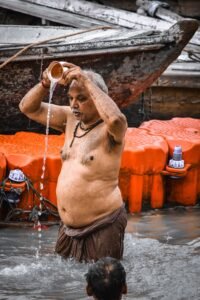
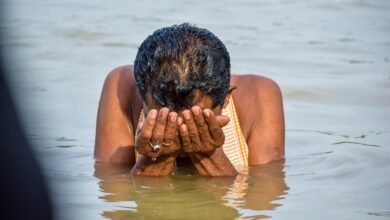
In Pitru Paksha, Tarpan involves a simple act of pouring water mixed with black sesame seeds (Til) and Kusha grass (Darjha) through hands aimed toward the earth or river, while chanting auspicious mantras.
The symbolic meaning here is about Satisfaction and Healing: The word Tarpan comes from the root Trup, meaning “to satisfy” or “to quench.” It signifies cooling down any unresolved desires or distress of past generations through pure water and intention. The act also displays Lineage Acknowledgment as the water flows seamlessly from one container to another, mirroring how life and ancestral traits flow across generations.
The Ecological Significance can not be overlooked, either. Water Reverence is in display here, as Tarpan is traditionally performed on riverbanks or near natural water bodies at dawn. This practice reinforces a sacred human connection to freshwater sources, historically ensuring community protection and cleanliness of rivers and lakes.
The Biological Properties of Sesame and Kusha Grass also play an important role here. The black sesame seeds have natural antimicrobial properties and act as soil conditioners. The Kusha grass is known in traditional botany for its filtration qualities, emphasizing a clean interaction with natural elements.
Pitru Paksha: The Broader Social & Ecological Impact
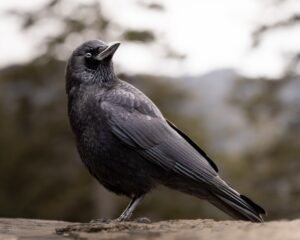
The ritual aspect Kaka bali (Crow Feeding) seemingly has a symbolic dimension of seeking to connect the physical world to the subtle ancestors. However it has a larger ecological and social dimension that supports avian biodiversity and seed-dispersing scavengers.
Similarly, Panchbali (or 5 Offerings) may appear as a way to express gratitude to cows, dogs, crows, ants, and devas, it has subtly taught the hundreds of generations of Sanatanis a sense of co-existence and shared responsibility for all living species.
The act of Charity (Daan) is considered supreme among all religions, thereby seeking to release greed and material hoarding among the followers. However, for generations in the land of Bharat, the act of kindness merged with the sense of giving has successfully redistributed wealth, food, and clothes to the underprivileged in the society since ages.
Don’t Miss the earlier Parts of the Series:
First Part
Pitru Paksha’s Crow: Spiritual Symbolism and Surprising Intelligence!
https://indiainput.com/pitru-pakshas-crow-spiritual-symbolism-and-surprising-intelligence/
Second Part
Pitru Paksha: Blind Faith or Ecological Science?
https://indiainput.com/pitru-paksha-blind-faith-or-ecological-science/