Pitru Paksha: Blind Faith or Ecological Science?
Honoring Ancestors with Gratitude: The Scientific & Social Essence of Pitru Paksh


Pitru Paksh is the fortnight that follows annual Ganesh Festival and precedes the auspicious Navratri, or nine day festival for the nine forms of Mother Godess Shakti, according to Hindu annual Calender. It is the time of the year, when Sanatani Hindus observe a several thousand years old ritual to remember their departed souls and ancestors, worship and pray. They also, try to ensure that their sons, daughters and grandsons and grand daughters, do the same with utmost reverence. Like several other age old beliefs the world over, this sounds illogical and complete blind faith. But, is it?
Here’s the second part in the special three part series, revisiting various aspects of the customary practice..
by Ajay Ramakant, researcher in ancient Science, Monuments and Texts.
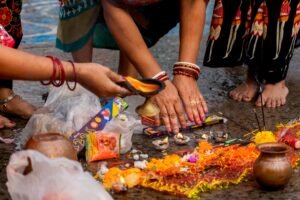
Pitru Paksh, a sixteen-day spiritual period in the annual Hindu calendar, is often offered harsh criticism on rationality..or, viewed through a spiritual lens. Remembering ancestors and praying to them is considered by many, as too pre historic, anti modern or anti rational etc. However, studies have revealed that its underlying principles offer profound social and psychological value for the modern world. Far from being a mere ritualistic practice, it serves as a powerful reminder of intergenerational connection, gratitude, and ecological harmony.
Pitru Paksha: Honoring Ancestors.. But, why?
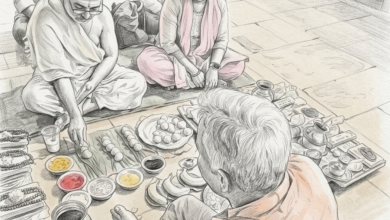
For many commentators and critics the world over, remembering the dead ancestors, bowing before their memories and honoring them, offering them food and sweets has appeared a medieval or even a pre historic like concept. Traditionally, the Sanatani Hindus have been doing just that since thousands of years, passing down the custom generation after another.
 Now, experts claim, through a psychological perspective, that honoring ancestors fulfills a deep human need for belonging and identity. Research in the modern behavioral science has established that understanding one’s lineage fosters emotional resilience, grounding individuals in a sense of continuity. Hindus have existed on the earth since the days of Rig Veda till date in what, the sociologists and geneticists see a range of continued presence of lineage and awareness of the core identity. Traditions like Pitru Paksha play a significant role, in passing down that awareness of core identity through generations, while imbibing the sense of gratitude and deep respect towards the ancestors who came earlier, strove hard and fought to make things better and easier.
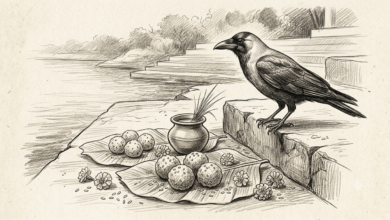
Furthermore, feeding crows, cows, and stray animals appears as just the continuation of an ancient act of kindness towards the animals. Studies now believe, the act highlights ancient ecological wisdom. Crows are key scavengers and natural seed dispersers; ensuring their sustenance during specific lunar phases reflects an early understanding of biodiversity and ecosystem balance.

The practice encourages humans to view themselves as part of a larger ecological food web rather than dominant rulers over nature. Sanatana texts have maintained since ages that, far from seeing themselves as rulers or exploiters of the earth, humans are just grateful earth dwellers, as equal as a tree or an ant or a cow. And the belief, that the act of bowing before them and feeding or watering them with the younger ones in the family, connects the spiritual link to their ancestors.. is a smart way of ensuring ecological continuity and social values across generations. Here, Pitru Paksh appears to be acting as a crucial bridge connecting the past and the future generations with the present.
Pitru Paksha: Here’s what, it appears to be designed for..

* Inculcating Humility and Gratitude: Performing Shraddha teaches youth that their accomplishments rest on the sacrifices of those who came before them. It nurtures humility by framing life as a continuation of inherited wisdom.
* Strengthening Social Cohesion: Preparing prasad and offering food (Daan) to animals, monks, and the less fortunate instills values of charity and selfless service (Seva).
* Promoting Healthy Family Dynamics: In an increasingly individualistic world, this practice appears to be working psychologically at a micro level, seeking to reinforce respect for elders while they are alive and preserves their memory after they pass.. thus, strengthening and deepening the bond of belonging and inculcating the sense of being responsible to ensure its continuity.. for the protection, preservation and betterment of not just the family, but the entire society and the nation (Rashtra).
Spaced between the annual Ganesh Festival and the Ashwin month Navratri festival, the two weeks of Pitru Paksh, exist together, to serve as an annual pause—a reflective fortnight that teaches empathy, environmental stewardship, and social responsibility. The two weeks, in a sense, not just purify the soul preparing it for the biggest annual holy festivals in Sanatana fold, the Navratri festival, the Vijayadashmi and the Deepavali.. but, their combined impact seem to be extended much beyond. By keeping memory and gratitude alive, it ensures that noble human values are passed smoothly across generations.
Don’t Miss: First Part of the Series
Pitru Paksha’s Crow: Spiritual Symbolism and Surprising Intelligence!
https://indiainput.com/pitru-pakshas-crow-spiritual-symbolism-and-surprising-intelligence/
Third Part of the Series
Pitru Paksha Demystified: Pind Daan, Tarpan, Ecology..
https://indiainput.com/pitru-paksha-demystified-pind-daan-tarpan-ecology/